
(+39) 02 9595721
Aerial-view-Genoa-Italy.jpg-1200x797.jpg

The Port of Genoa is becoming increasingly important in Mediterranean logistics and Asia-Europe trade routes, thanks to a major investment backed by PSA International, the Singapore-based global port operator.

In February 2026, PSA Italy and the Western Ligurian Sea Port Authority signed a strategic agreement in Singapore to support the development of the PSA Genova Prà container terminal. The investment plan, worth around one billion dollars, aims to modernise port infrastructure, improve terminal efficiency and increase the capacity of one of Italy’s most important container gateways.

For companies involved in international shipping, freight forwarding and supply-chain management, this is not just a local port development. It is a signal of how Mediterranean ports are gaining strategic relevance in global logistics. As supply chains become more complex, European importers and exporters need faster, more resilient and better connected maritime routes.

Genoa is already a key logistics hub for Northern Italy and Central Europe. Its position allows goods arriving from Asia and the Mediterranean to reach major industrial areas in Italy, Switzerland, Southern Germany and other European markets. Strengthening the PSA Genova Prà terminal could therefore improve the competitiveness of the entire logistics corridor.

The project is expected to support higher container handling capacity, more efficient port operations and more sustainable logistics processes. Investments in electrification, digitalisation and terminal modernisation are increasingly important as ports face growing pressure to reduce emissions while maintaining high service levels.

The agreement also shows how Singapore is not only one of the world’s leading maritime hubs, but also a strategic investor in global port infrastructure. Through PSA International, Singapore is helping reinforce the connection between Asian manufacturing, Mediterranean shipping routes and European distribution networks.

For logistics operators, the message is clear: the Mediterranean is becoming more central in the future of Asia-Europe trade. Ports such as Genoa can play a stronger role as companies look for alternatives and complements to traditional Northern European gateways.

For businesses shipping goods between Asia and Europe, this development is worth monitoring. Better port capacity, improved terminal efficiency and stronger Mediterranean connections can influence transit times, routing decisions, freight planning and supply-chain resilience.

Why this matters for international shippers

For companies managing international cargo, port infrastructure is not a distant topic. It directly affects route planning, delivery reliability, container availability, transit times and the overall resilience of the supply chain.

The development of Genoa as a stronger Mediterranean gateway could offer new opportunities for businesses moving goods between Asia and Europe, especially those looking for efficient access to Northern Italy and Central European markets.


india-ports-full-cargo.jpg

India–Europe Logistics Corridor: Key Indian Ports and Services for EU Freight Partners

India is emerging as a strategic logistics hub for European shippers looking for reliable long-term partners along the EU–India trade lane. Its network of deep-sea ports, logistics corridors and trade agreements is reshaping how full cargo flows move between Europe and the Indian subcontinent. 

Why India Matters for EU Logistics and Freight Forwarders

For EU-based logistics buyers, India offers a combination of scale, diversification and strategic location on main East–West shipping routes. West-coast ports directly connect to leading European hubs, while inland corridors link major production clusters with export gateways.

The EU and India have concluded a comprehensive free trade agreement that will progressively eliminate or reduce tariffs on a large share of goods traded between the two regions, creating strong incentives for higher physical cargo volumes. Detailed questions and answers on the agreement are available here: Questions and answers on the EU–India Free Trade Agreement.

According to official EU information on trade relations with India, the agreement is designed to ensure fair market access, predictable investment conditions and full respect of multilateral trade rules, with maritime transport playing a central enabling role. EU trade relations with India – European Union.


Key Indian Ports Serving EU-Bound Cargo

India’s port system includes a set of “major ports” wholly owned by the Government of India, complemented by numerous minor ports. Official figures indicate there are currently 12 major ports governed by the Major Port Authorities Act, 2021: Deendayal, Mumbai, Jawaharlal Nehru, Mormugao, New Mangalore, Cochin, V.O. Chidambaranar, Chennai, Kamarajar, Visakhapatnam, Paradip and Syama Prasad Mookerjee Port. Press Information Bureau – Major and Minor Ports.

For EU logistics buyers, several of these ports are particularly relevant as gateways for Europe-bound cargo, due to their capacity, connectivity and industrial hinterlands.

West Coast: Main Gateways to Europe

  • Jawaharlal Nehru Port (JNPA, Nhava Sheva) – Located in Maharashtra near Mumbai, JNPA is one of India’s primary container ports and serves as a crucial hub for containerised exports to global markets, including Europe. It is listed among the major ports serving India’s western seaboard.
  • Deendayal Port (Kandla) – Situated in Gujarat, Deendayal Port is a major facility for liquid and dry bulk cargo and supports a wide inland market connected to manufacturing and processing industries with strong export orientation.
  • Mumbai Port – Also on the west coast, Mumbai Port handles a varied cargo mix and historically functions as a core gateway for international trade, complementing container flows via JNPA.
  • Cochin Port – Located in Kerala on the southwest coast, Cochin is recognised as a major port and serves as an important node on Indian Ocean shipping routes, with the potential to support Europe-linked services via regional and long-haul connections.

These west-coast ports, recognised officially as major ports, are well placed to capture additional EU-bound volumes as trade preferences are implemented and capacity continues to develop along the India–Europe corridor.

East and South Coasts: Complementary Hubs

  • Chennai Port – A long-established major port on the southeastern coast, Chennai handles containers, automobiles and other general cargo, and is part of India’s official list of major ports.
  • Kamarajar Port (Ennore) – Also in Tamil Nadu, Kamarajar is listed as a major port and plays an important role in handling bulk and project cargo linked to industrial growth in the region.
  • Visakhapatnam Port – On the east coast in Andhra Pradesh, Visakhapatnam is a deep-water major port handling coal, iron ore, crude and other commodities relevant for global supply chains.
  • Paradip Port – Located in Odisha on the eastern seaboard, Paradip is another major port focused on bulk cargo, supporting industrial corridors that connect to international markets.

By combining west-coast gateways with east and south-coast major ports, EU logistics planners can design India–Europe solutions that balance transit times, cost and proximity to India’s key production zones.


Logistics Services Under the EU–India Trade Framework

Logistics services are explicitly addressed in analytical work prepared in the context of the EU–India Trade and Investment Agreement, highlighting their importance for both economies. A comprehensive study examines the prospects of liberalising trade in logistics services between India and EU Member States, and identifies market access and regulatory barriers. Logistics Services under Indo–EU TIA – Centre for WTO Studies.

The study describes logistics as encompassing the planning, organisation, management, execution and control of freight transport operations, with strong emphasis on door-to-door integration and coordination between different transport modes. It also underlines the relevance of auxiliary services such as warehousing and freight forwarding.

For EU logistics buyers, this means that the evolving EU–India framework is not only about tariff reductions but also about clearer conditions for cross-border logistics cooperation, transparency and standards, creating a more predictable environment for long-term partnerships.


Official Information on EU–India Trade and Connectivity

The European Union provides dedicated, regularly updated pages on its trade relationship with India, including key data, policy priorities and the state of bilateral agreements. This is a primary reference for understanding the institutional context in which logistics operators work. EU–India Agreements – EU Trade.

Additional information from the European Parliament outlines India’s connectivity initiatives and their relevance for EU trade, with references to transport, infrastructure and corridor development. This helps logistics decision-makers align their network strategies with long-term policy directions. India Connectivity Initiatives – European Parliament Briefing.

On the Indian side, the Press Information Bureau provides official releases on ports policy, including the status and governance of major ports, while other government-linked resources describe the distribution and economic impact of India’s ports across both coasts. Major and Minor Ports – Press Information Bureau. Overview of Major Ports in India.


What EU Logistics Buyers Should Look for in Indian Partners

When European shippers and freight forwarders search for logistics partners in India, they operate within this institutional framework of recognised major ports, trade agreements and connectivity initiatives. To select the right counterpart, they typically consider:

  • Presence in major government-recognised ports – Operators active in Jawaharlal Nehru, Deendayal, Mumbai, Cochin, Chennai, Kamarajar, Visakhapatnam or Paradip can offer direct access to the main corridors defined in official port policy.
  • Understanding of EU–India trade rules – Partners familiar with the EU–India trade agreement architecture and customs and trade facilitation provisions are better positioned to handle compliant, fast cross-border flows. Q&A on the EU–India Free Trade Agreement.
  • Alignment with connectivity and corridor priorities – Companies that structure their services around recognised connectivity initiatives and logistics corridors can offer more predictable and scalable solutions. India Connectivity Initiatives – European Parliament.

Read more

EU–India Free Trade Agreement: what it means for companies shipping full cargo to India


EU–India-Free-Trade-Agreement-full-cargo-1200x675.jpg

what it really changes for companies shipping goods to India

The European Union–India Free Trade Agreement is often described as a political or diplomatic milestone. In reality, it is something far more concrete. It is a long-term structural agreement designed to make trade between Europe and India easier, more predictable, and less exposed to friction. Lower tariffs, simplified rules, clearer frameworks for goods, services, and investments.

Think of it as a change in operating conditions for companies—not as a press release. To understand the institutional framework behind the agreement, the European Commission provides detailed documentation on EU–India trade relations and ongoing negotiations.


India is everywhere in the conversation. Is it really becoming a key market?

India is not becoming relevant. It already is. What is changing is scale, depth, and intent. India is consolidating its role as a manufacturing hub, a fast-growing consumption market, and a strategic logistics partner for Europe. The Free Trade Agreement accelerates a trend that has been underway for years: more goods, more routes, and increasingly complex cargo flows between Europe and India.

According to data and analyses from global institutions such as the World Bank, India plays an increasingly central role in global trade and logistics networks. This is not a temporary shift. It is a reconfiguration.


Why should companies care about this agreement now?

Because trade agreements do not stay on paper. They translate into changes in:

  • cost structures,
  • pricing logic,
  • delivery times,
  • and margins.
If your company exports or imports goods, works with international suppliers, plans to grow in Asia, or depends on stable supply chains, this agreement will directly affect your competitiveness in the coming years. Ignoring it means reacting late. Understanding it means planning early.

Is this agreement relevant only for large multinationals, or also for SMEs?

It affects both—just in different ways. Large corporations may rethink sourcing strategies, supply chain architecture, and long-term investments.
For SMEs, the impact is often more pragmatic: lower entry barriers, clearer customs rules, and reduced costs that previously made India feel “too complex” or “too far away.”

For many European SMEs, this agreement is not about aggressive expansion. It is about finally making India viable.


Which industries are most impacted?

The strongest effects are expected in sectors such as:

  • automotive and components,
  • machinery and industrial equipment,
  • pharmaceuticals and healthcare,
  • textiles, fashion, and leather goods,
  • agri-food and specialty products,
  • digital and professional services.

That said, even companies outside these sectors may feel indirect effects through pricing pressure, sourcing shifts, or strategic decisions made by partners and competitors. Trade rarely stays confined to one industry.


What should companies do right now?

This is not a legal exercise. It is a business clarity exercise. Three actions make sense:

Understand exposure
Map where India—or the EU—already touches your business: suppliers, clients, competitors.

Align internal teams
Procurement, sales, operations, and leadership should share the same understanding of what is changing.

Update market positioning
Trade conditions influence pricing, delivery times, and value propositions. Communication matters. Doing nothing is still a decision.


Why is the EU–India FTA strategically important beyond trade?

Because it reflects a broader global shift. The agreement is part of a move toward:

  • diversified supply chains,
  • reduced dependency on single markets,
  • long-term economic partnerships instead of short-term fixes.

Organizations such as the OECD highlight how resilience and diversification are becoming central to global supply chain strategies. For companies, this means more opportunity—but also more responsibility in how growth is planned.


Shipping full cargo to India: a new destination or a complex one?

India is not new. It is complex, layered, and unforgiving of improvisation. Ports, customs procedures, documentation requirements, transit times, and local coordination require:

  • operational continuity,
  • on-the-ground knowledge,
  • and long-term logistics experience.

Indian customs and regulatory frameworks are managed by authorities such as the Central Board of Indirect Taxes and Customs, reflecting a system that demands precision rather than experimentation. This is why India is not a destination to “test lightly,” especially with full cargo shipments.


Who can realistically manage full cargo shipments to India?

Only operators who have done it consistently over time. Shipping full cargo to India means managing:

  • FCL containers and break bulk cargo,
  • industrial and oversized loads,
  • long-haul maritime planning,
  • documentation aligned with Indian customs procedures,
  • coordination between European exporters and Indian importers.

This is not simply about moving goods. It is about orchestrating systems across borders.


Why does experience matter more than price on this route?

Because mistakes are expensive. A missing document, an incorrect HS code, a misaligned Incoterm, or poor port coordination can lead to:

  • delays measured in weeks,
  • blocked or held goods,
  • demurrage and detention costs,
  • and strained commercial relationships.

On routes such as Europe–India, experience is not a premium. It is risk mitigation.


Where Fullcargo fits into this landscape

At Fullcargo, shipping full cargo to India is not a recent strategic experiment. It is part of our operational history. Long before India became a headline, it was already a destination we handled with continuity and structure —because complex markets reward experience, not improvisation. In a context reshaped by the EU–India Free Trade Agreement, that experience becomes even more relevant.


Read more

India–Europe Logistics Corridor: Key Indian Ports and Services for EU Freight Partners


dry_contaniner_fulcargo_italy-1200x800.png

From Milan to the World

Since 1988, Fullcargo has been connecting Italian exporters with global markets — shipping from Milan to India, South Korea, the UAE, and beyond.
Over nearly four decades, we’ve learned that choosing the right container is one of the most strategic decisions in international logistics.
This guide explains every main container type, why it exists, and when to use it — whether you’re exporting machinery, pharmaceuticals, or luxury goods.

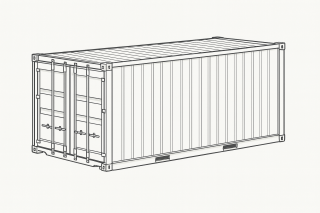
Dry Container Fullcargo

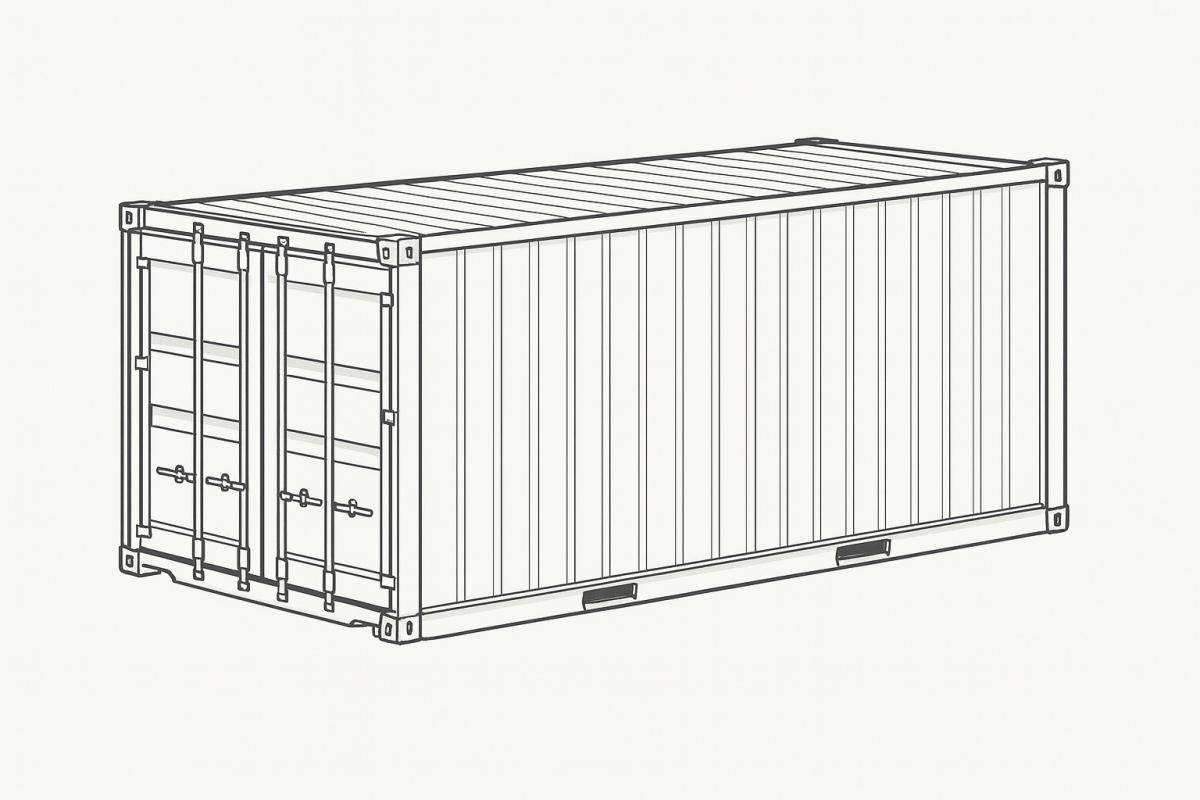
1. Dry Container (General Purpose Container)

What it is: The most common container type — fully enclosed, weatherproof, with solid walls and roof.
Why it’s used: Ideal for dry goods that don’t require temperature control.

Examples: Electronics, textiles, packaged goods, furniture.
Sizes available: 20ft and 40ft standard.
Pro tip: Perfect when your cargo is stackable and not sensitive to humidity or temperature fluctuations.

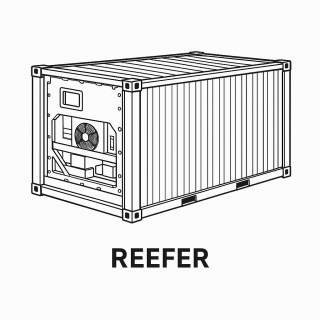
Reefer

2. Reefer Container (Refrigerated Container)

What it is: A temperature-controlled container with an integrated refrigeration unit.
Why it’s used: To transport perishable items safely across long distances.
Examples: Food, dairy, pharmaceuticals, flowers.

How it works: Maintains temperatures between -30°C and +30°C, connected to vessel or terminal power.
Pro tip: Always check the temperature-monitoring system and ensure pre-cooling before loading.

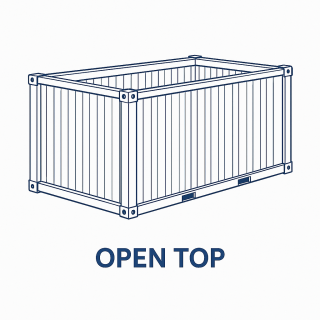
Open Top Container Fullcargo

3. Open Top Container

What it is: A container without a fixed roof (covered with tarpaulin).
Why it’s used: For cargo taller than the container’s height that needs loading from above.

Examples: Heavy machinery, marble blocks, construction materials.
Pro tip: Use this container for oversized freight that can’t pass through standard doors.


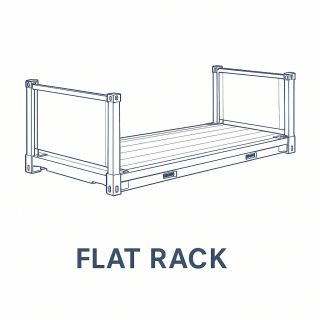
flat rank container fullcargo italy

4. Flat Rack Container

What it is: A container with no side walls and sometimes no end walls.
Why it’s used: For heavy, wide, or irregularly shaped cargo.

Examples: Vehicles, pipes, industrial components.
Pro tip: Ideal for “project cargo” — items requiring crane loading or lashing to the deck.

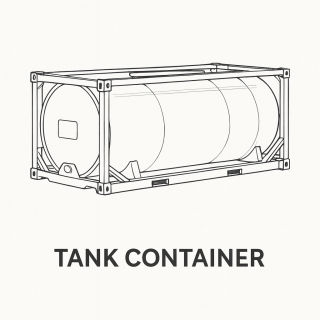
Tank Container fullcargo italy

5. Tank Container

What it is: A cylindrical tank mounted inside a steel frame.
Why it’s used: To transport bulk liquids, chemicals, or gases safely.

Examples: Wine, fuel, oils, industrial chemicals.
Safety note: Each tank container follows ISO standards and requires periodic inspection.


Why Container Choice Matters in Global Logistics

Choosing the right container reduces risk, prevents delays, and optimizes shipping costs.
A container is not just a metal box — it’s a controlled environment for your product’s journey.

At Fullcargo, we help our clients:

  • Identify the most efficient and secure container type.
  • Optimize routes for India, South Korea, and the UAE.
  • Manage documentation and customs with precision.
  • Track and monitor cargo using digital freight tools.

Fullcargo: Italian Roots, Global Reach

Founded in Milan in 1988, Fullcargo has grown from a local forwarding company into a global logistics partner for industries ranging from fashion to machinery.
We ship worldwide — handling full-container loads (FCL), less-than-container loads (LCL), air freight, and project logistics.

Want to learn more?

Contact our logistics experts for a personalized consultation.


fullcargo-Firefly_ecologia-e-spedizioni-di-merci-nel-mondo-nel-prossimo-futuro-470557-1200x933.jpg
International shipping is the backbone of global trade. As 2025 approaches, logistics operators, companies, and brands exporting to South Korea, Japan, and the United Arab Emirates must prepare for regulatory changes and adopt new strategies to remain competitive. Learn about the most important changes and trends that will revolutionize the industry.

New Shipping Regulations in 2025

ADR 2025 Updates
As of January 1, 2025, new provisions of the European Agreement for the International Carriage of Dangerous Goods by Road (ADR) will include:

    • New UN numbers for sodium-ion batteries and vehicles with multiple batteries.
    • Exemptions extended to hazardous waste.
    • Changes to documentation, marking and labeling.
      The transition period ends on July 1, 2025!

IATA Air Transport Regulations.
More than 350 changes will affect the air transport of dangerous goods. Major changes:

    • Exemptions for data loggers and load trackers.
    • Updated restrictions for freight carried by passengers.

Shipments of WEEE (Waste Electrical and Electronic Equipment)

New restrictions to prevent exports to countries without adequate treatment infrastructure. These regulations aim for more responsible e-waste management.

Logistics Trends for 2025

  • Automation and Artificial Intelligence
    Automated systems and artificial intelligence algorithms will optimize logistics operations, reducing errors and improving delivery times.
  • Green Logistics
    Sustainability will be a central theme, with investments in electric vehicles and green packaging solutions to reduce environmental impact.
  • Advanced Traceability
    With the Internet of Things (IoT) and blockchain, the supply chain will become more transparent, improving shipment tracking and increasing customer trust.

Preparing for the Future of Shipping

Logistics operators and brands exporting to Asian and Middle Eastern markets must:

  • Update operating procedures according to 2025 regulations.
  • Invest in staff training to handle new technologies and regulations.
  • Integrate innovative solutions to automate and optimize the supply chain.

The year 2025 will be a pivotal year for the international shipping industry. Preparing for new regulatory challenges and embracing emerging trends will ensure competitiveness, sustainability, and success in global markets.


fullcargo-sustenability.png

Making business sustainable in the transportation and logistics sector presents unique challenges. This sector, essential to the global economy, depends heavily on resources that impact the environment, such as fossil fuel. Greenhouse gas emissions, high energy consumption, and waste management are critical issues. In addition, the growing demand for transportation and logistics services intensifies these challenges, making it critical for companies to adopt innovative and efficient strategies to reduce their environmental impact.

In the competitive transportation sector with significant environmental challenges, FullCargo is engaging in reforestation projects. We seek to understand how...

How does FullCargo SRL engage in sustainability?

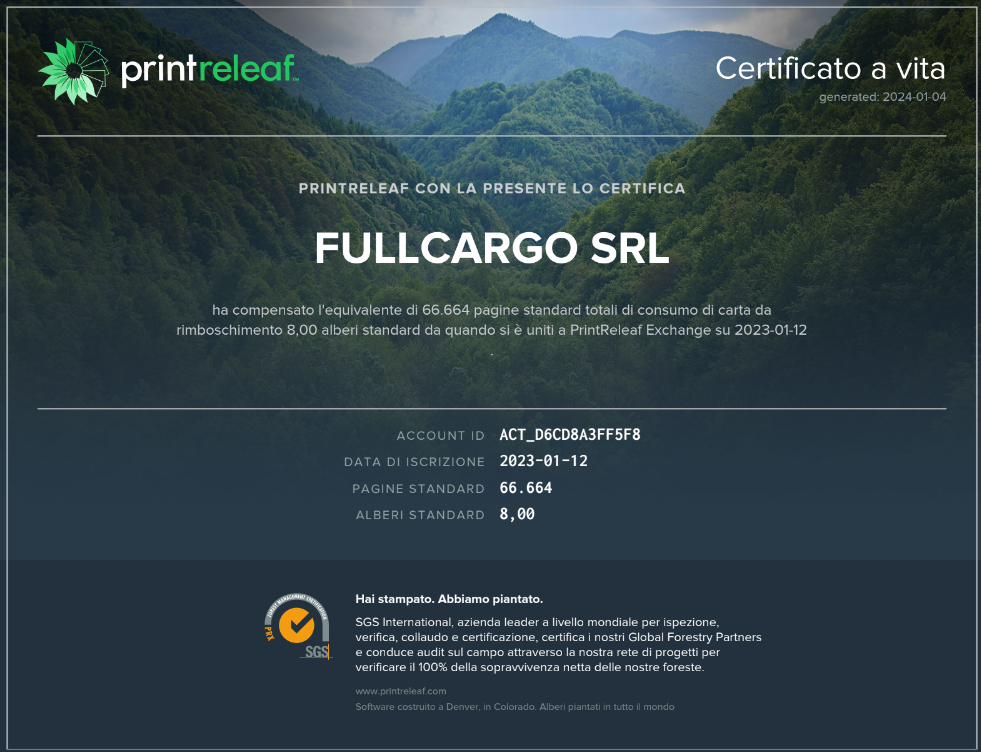
Despite the difficulties in the industry, we offset the use of 66,664 standard paper pages by planting 8 trees in Tanzania from January 12, 2023 with PrintReleaf. A humble but significant step.

What are the challenges of sustainability in the transportation sector?

The transportation sector faces the difficulty of reducing emissions and environmental impact due to its resource and energy intensive nature.

What can a transportation company do to be more sustainable?

In addition to initiatives such as FullCargo's, companies can adopt low-emission vehicles, optimize routes, and promote a culture of recycling and waste reduction.

Addressing environmental challenges in the transportation sector requires courage and humility. Initiatives like those of FullCargo SRL are essential to lead the industry toward a more sustainable future.


IMG-20230712-WA0010-1200x900.jpg

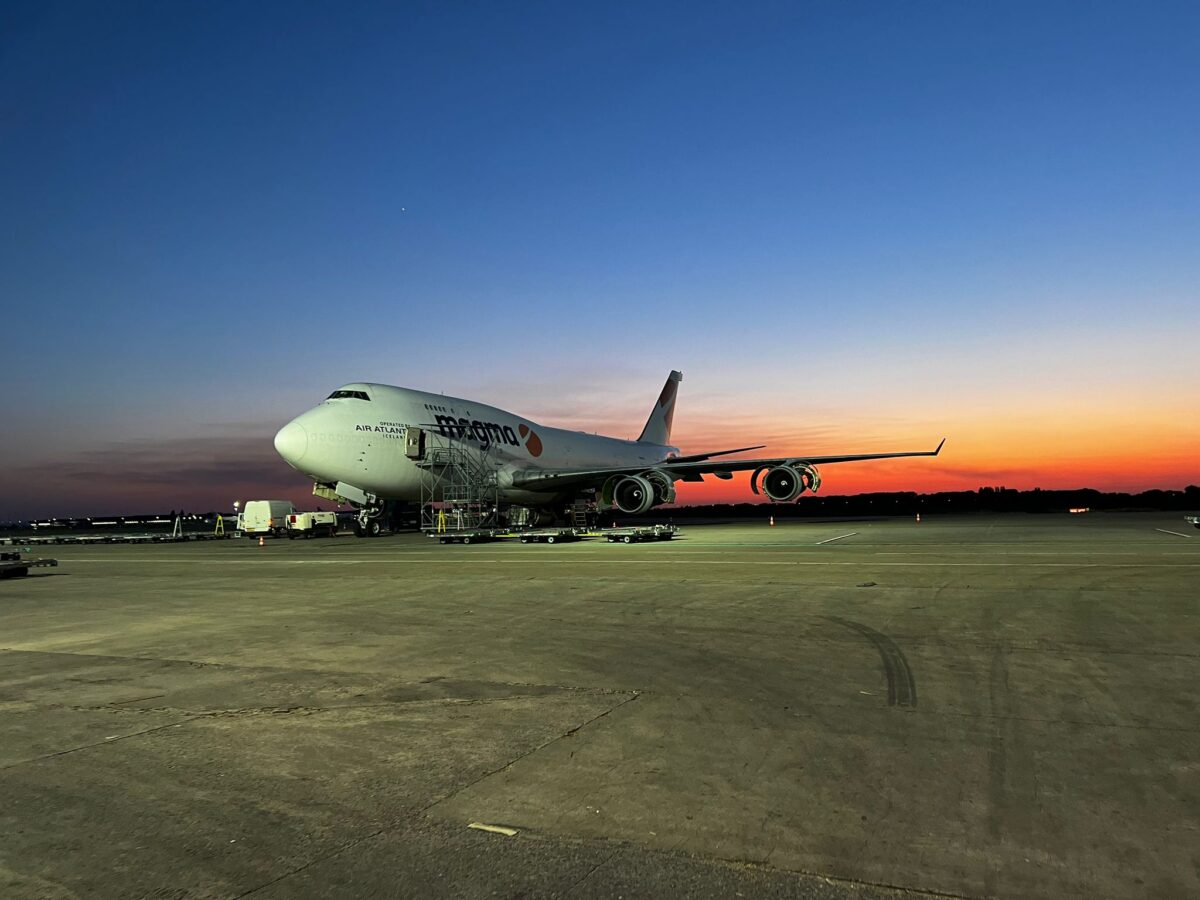
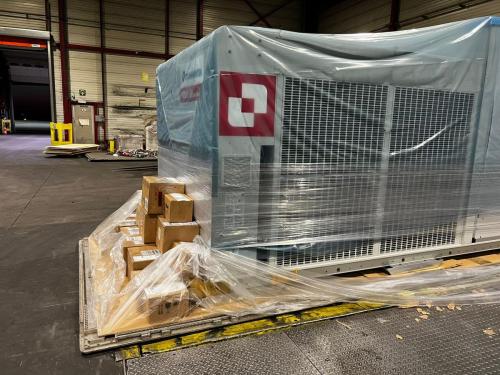
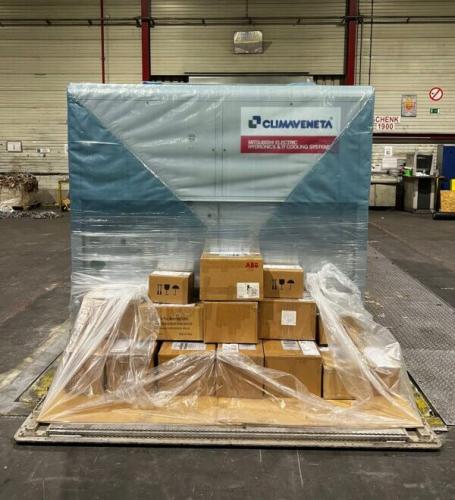
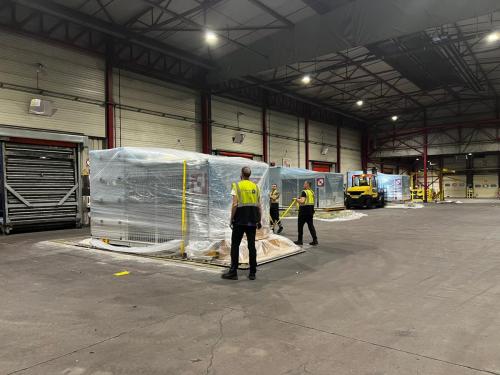
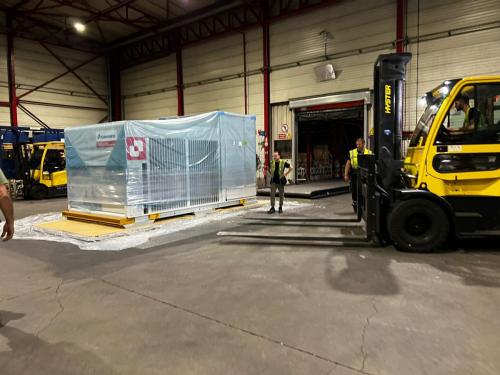
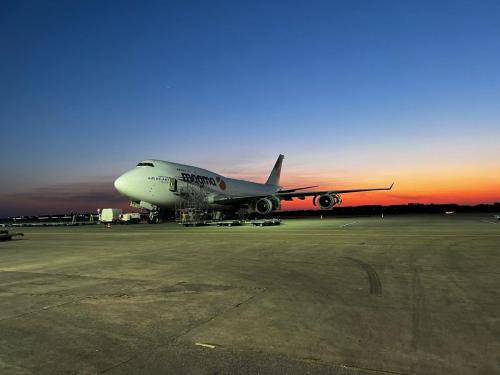
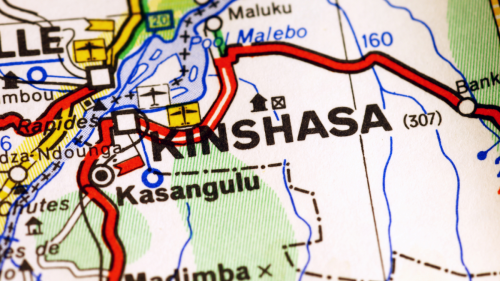
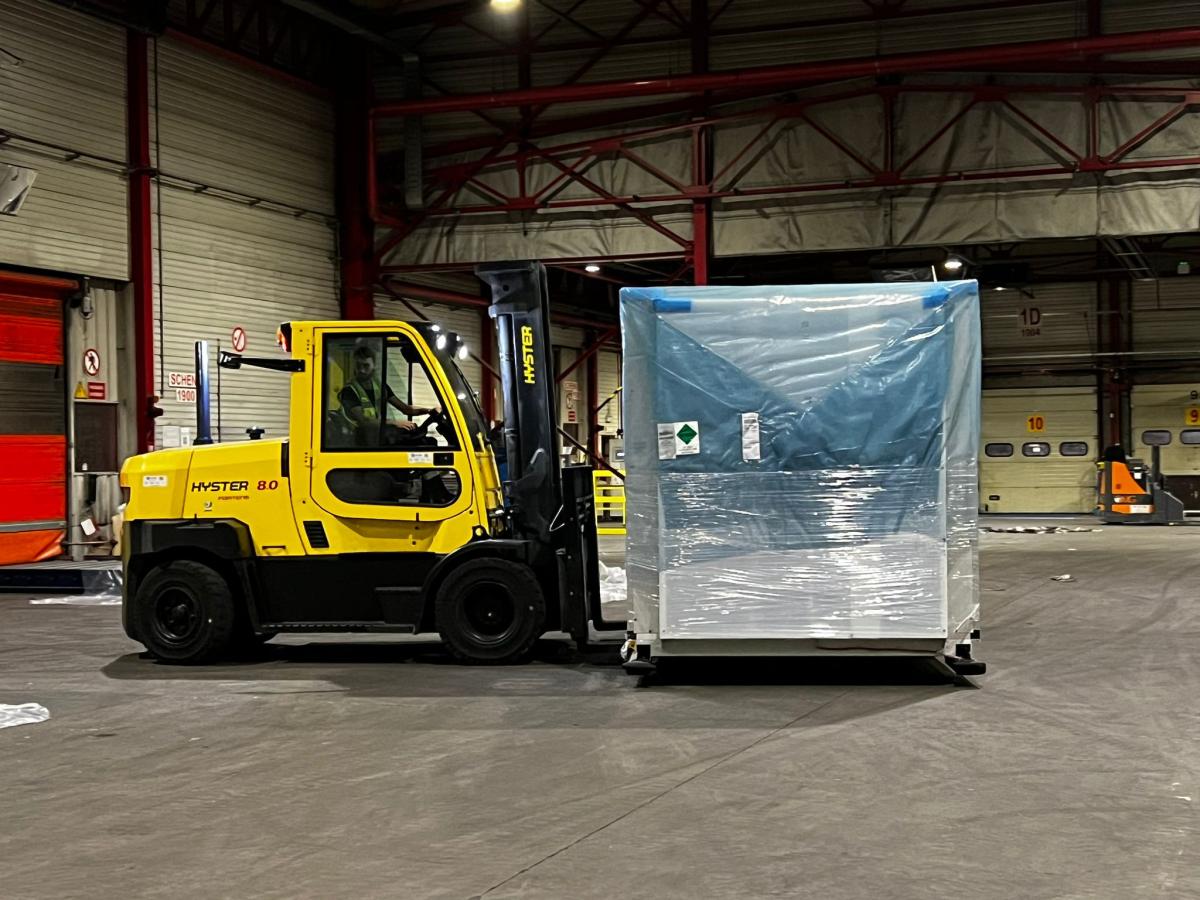
As the logistics industry evolves, specialized logistics partners are becoming increasingly vital. If you need further proof of this, then the sterling track record of FULLCARGO is an excellent case in point. One of our most recent successes was the seamless execution of a large-scale operation, involving moving three charter flights from Liege Airport (B747 F) to Kinshasa. This was no ordinary shipment; it involved a significant haul of 60 tons of parquet for basketball stadiums and also an additional 200 tons of diverse goods (podium, all cooling system for 2 stadiums). Let's delve into the benefits of working with specialized logistics partners and how FULLCARGO exceeded expectations.

Expert Handling of Specialized Cargo

Moving cargo, especially when it involves high-value items, requires industry-specific knowledge and experience. We moved 60 tons of parquet for basketball stadiums, illustrating our capability to handle your special cargo requirements. Whether it's sensitive or oversized cargo, FULLCARGO provides expertise and precision handling.

Comprehensive Solutions

We don't stop at moving cargo. For this project, we also transported basketball podiums and the complete cooling system for two stadiums. This level of integration provides you with a one-stop solution, eliminating the stress and complexity of coordinating with multiple logistics providers.

Seamless Loading and Unloading

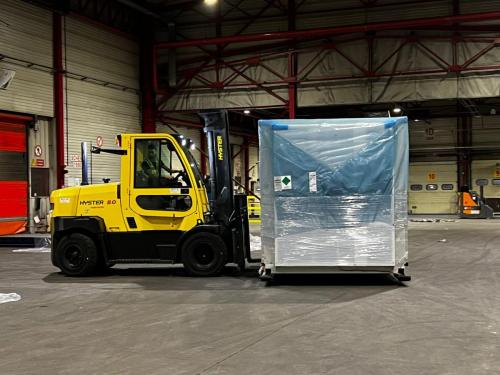
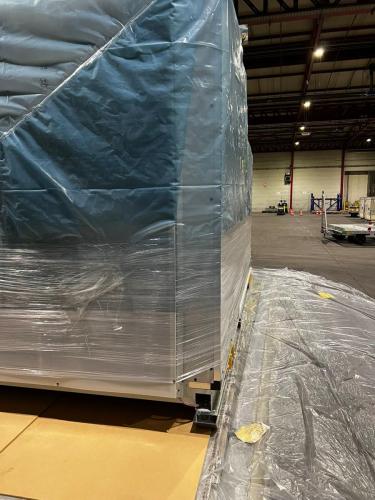
FULLCARGO's expertise extends to every phase of the logistics process. With our wealth of experience in loading and unloading, you can be sure of a seamless transition of your goods. The pictures below show the care we take in stowing goods inside the aircraft, and the proficiency with which we unload from the aircraft.

#bwg_container1_0 { display: table; /*visibility: hidden;*/ } #bwg_container1_0 * { -moz-user-select: none; -khtml-user-select: none; -webkit-user-select: none; -ms-user-select: none; user-select: none; } #bwg_container1_0 #bwg_container2_0 .bwg_slideshow_image_wrap_0 { background-color: #F2F2F2; width: 800px; height: 500px; } #bwg_container1_0 #bwg_container2_0 .bwg_slideshow_image_0 { max-width: 800px; max-height: 410px; } #bwg_container1_0 #bwg_container2_0 .bwg_slideshow_embed_0 { width: 800px; height: 410px; } #bwg_container1_0 #bwg_container2_0 #bwg_slideshow_play_pause_0 { background: transparent url("https://www.fullcargo.eu/wp-content/plugins/photo-gallery/images/blank.gif") repeat scroll 0 0; } #bwg_container1_0 #bwg_container2_0 #bwg_slideshow_play_pause-ico_0 { color: #D6D6D6; font-size: 35px; } #bwg_container1_0 #bwg_container2_0 #bwg_slideshow_play_pause-ico_0:hover { color: #BABABA; } #bwg_container1_0 #bwg_container2_0 #spider_slideshow_left_0, #bwg_container1_0 #bwg_container2_0 #spider_slideshow_right_0 { background: transparent url("https://www.fullcargo.eu/wp-content/plugins/photo-gallery/images/blank.gif") repeat scroll 0 0; } #bwg_container1_0 #bwg_container2_0 #spider_slideshow_left-ico_0, #bwg_container1_0 #bwg_container2_0 #spider_slideshow_right-ico_0 { background-color: #FFFFFF; border-radius: 20px; border: 0px none #FFFFFF; box-shadow: ; color: #D6D6D6; height: 37px; font-size: 12px; width: 37px; opacity: 1.00; } #bwg_container1_0 #bwg_container2_0 #spider_slideshow_left-ico_0:hover, #bwg_container1_0 #bwg_container2_0 #spider_slideshow_right-ico_0:hover { color: #BABABA; } #spider_slideshow_left-ico_0{ left: -9999px; } #spider_slideshow_right-ico_0{ left: -9999px; } #bwg_container1_0 #bwg_container2_0 .bwg_slideshow_image_container_0 { bottom: 90px; width: 800px; height: 500px; } #bwg_container1_0 #bwg_container2_0 .bwg_slideshow_filmstrip_container_0 { display: table; height: 90px; width: 800px; bottom: 0; } /* Filmstrip dimension */ #bwg_container1_0 #bwg_container2_0 .bwg_slideshow_filmstrip_0 { left: 20px; width: 760px; /*z-index: 10106;*/ } #bwg_container1_0 #bwg_container2_0 .bwg_slideshow_filmstrip_thumbnails_0 { left: 0px; width: 1304px; height: 90px; } #bwg_container1_0 #bwg_container2_0 .bwg_slideshow_filmstrip_thumbnail_0 { width: 161px; height: 90px; margin: 0px 2px 0 0 ; border: 0px none #000000; border-radius: 0; } #bwg_container1_0 #bwg_container2_0 .bwg_slideshow_thumb_active_0 { border: 0px solid #FFFFFF; } #bwg_container1_0 #bwg_container2_0 .bwg_slideshow_thumb_deactive_0 { opacity: 1.00; } #bwg_container1_0 #bwg_container2_0 .bwg_slideshow_filmstrip_left_0, #bwg_container1_0 #bwg_container2_0 .bwg_slideshow_filmstrip_left_disabled_0 { background-color: #F2F2F2; display: table-cell; width: 20px; left: 0; } #bwg_container1_0 #bwg_container2_0 .bwg_slideshow_filmstrip_right_0, #bwg_container1_0 #bwg_container2_0 .bwg_slideshow_filmstrip_right_disabled_0 { background-color: #F2F2F2; display: table-cell; right: 0; width: 20px; } #bwg_container1_0 #bwg_container2_0 .bwg_slideshow_filmstrip_left_0 i, #bwg_container1_0 #bwg_container2_0 .bwg_slideshow_filmstrip_right_0 i, #bwg_container1_0 #bwg_container2_0 .bwg_slideshow_filmstrip_left_disabled_0 i, #bwg_container1_0 #bwg_container2_0 .bwg_slideshow_filmstrip_right_disabled_0 i { color: #BABABA; font-size: 20px; } #bwg_container1_0 #bwg_container2_0 .bwg_slideshow_filmstrip_left_0 { display: none; } #bwg_container1_0 #bwg_container2_0 .bwg_slideshow_filmstrip_left_disabled_0, #bwg_container1_0 #bwg_container2_0 .bwg_slideshow_filmstrip_right_disabled_0 { display: none; opacity: 0.3; } #bwg_container1_0 #bwg_container2_0 .bwg_slideshow_filmstrip_left_disabled_0 { display: table-cell; } #bwg_container1_0 #bwg_container2_0 .bwg_slideshow_watermark_spun_0 { text-align: left; vertical-align: bottom; } #bwg_container1_0 #bwg_container2_0 .bwg_slideshow_title_spun_0 { text-align: right; vertical-align: top; } #bwg_container1_0 #bwg_container2_0 .bwg_slideshow_description_spun_0 { text-align: right; vertical-align: bottom; } #bwg_container1_0 #bwg_container2_0 .bwg_slideshow_watermark_image_0 { max-height: 90px; max-width: 90px; opacity: 0.30; } #bwg_container1_0 #bwg_container2_0 .bwg_slideshow_watermark_text_0, #bwg_container1_0 #bwg_container2_0 .bwg_slideshow_watermark_text_0:hover { text-decoration: none; margin: 4px; position: relative; z-index: 15; } #bwg_container1_0 #bwg_container2_0 .bwg_slideshow_title_text_0 { font-size: 16px; font-family: Ubuntu; color: #FFFFFF !important; opacity: 0.70; border-radius: 5px; background-color: #000000; padding: 0 0 0 0; margin: 5px; } #bwg_container1_0 #bwg_container2_0 .bwg_slideshow_description_text_0 { font-size: 14px; font-family: Ubuntu; color: #FFFFFF !important; opacity: 0.70; border-radius: 0; background-color: #000000; padding: 5px 10px 5px 10px; } #bwg_container1_0 #bwg_container2_0 .bwg_slideshow_description_text_0 * { text-decoration: none; color: #FFFFFF !important; } #bwg_container1_0 #bwg_container2_0 .bwg_slideshow_dots_0 { width: 12px; height: 12px; border-radius: 5px; background: #F2D22E; margin: 3px; } #bwg_container1_0 #bwg_container2_0 .bwg_slideshow_dots_container_0 { width: 800px; bottom: 0; } #bwg_container1_0 #bwg_container2_0 .bwg_slideshow_dots_thumbnails_0 { height: 18px; width: 144px; } #bwg_container1_0 #bwg_container2_0 .bwg_slideshow_dots_active_0 { background: #FFFFFF; border: 1px solid #000000; }
#bwg_container1_0 #bwg_container2_0 #spider_popup_overlay_0 { background-color: #EEEEEE; opacity: 0.60; }
if (document.readyState === 'complete') { if( typeof bwg_main_ready == 'function' ) { if ( jQuery("#bwg_container1_0").height() ) { bwg_main_ready(jQuery("#bwg_container1_0")); } } } else { document.addEventListener('DOMContentLoaded', function() { if( typeof bwg_main_ready == 'function' ) { if ( jQuery("#bwg_container1_0").height() ) { bwg_main_ready(jQuery("#bwg_container1_0")); } } }); }

Trustworthy and Reliable

Your cargo is our responsibility, and we take that responsibility very seriously. When you entrust your goods to us, you can rest assured they'll reach their destination safely and on time. With our successful completion of three full flights from Liege Aiport (B747 F) as a testament, FULLCARGO has a track record that speaks for itself.

Versatility and Adaptability

FULLCARGO has the capacity to adapt to complex and demanding projects. The move to Kinshasa was a massive movement, showcasing our ability to rise to any logistics challenge.

FULLCARGO rocks!

At FULLCARGO, we take pride in the services we provide. As the saying goes, the proof of the pudding is in the eating. Our successful completion of these projects is a testament to our competence, reliability, and dedication to client satisfaction.

Choosing a specialized logistics partner like FULLCARGO means peace of mind, knowing your cargo is in safe hands. So why wait? Start working with FULLCARGO today and experience the benefits of a specialized logistics partner. Remember, when it comes to cargo logistics, FULLCARGO rocks!


kinshasa-full-cargo-1200x675.png

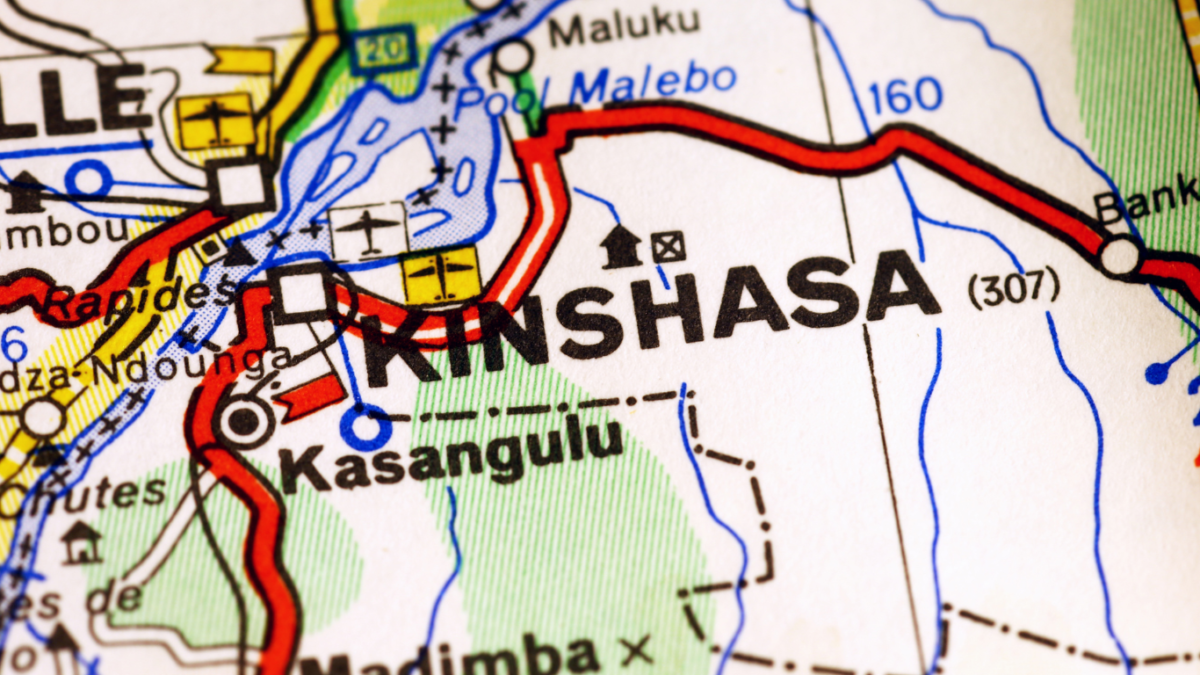
In an increasingly globalized society, international freight transport is proving to be a crucial component for economic growth and sustainable development. In particular, the interaction between Italy and Africa-in this specific case, Kinshasa, capital of the Democratic Republic of Congo-is of paramount importance. This report provides a clear picture of the challenges and opportunities that characterize international shipping between these two points on the globe.

Recently, as Fullcargo, we dealt with two significant shipments from Italy to Kinshasa. The first shipment weighed 62 tons and occupied 105 cubic meters, while the second shipment consisted of 20 tons and occupied 100 cubic meters. These two shipments, although different in weight, occupied almost the same volume, highlighting one of the main challenges in logistics: space optimization.

Freight transport from Italy to Kinshasa presents several challenges. First, the logistics infrastructure in Africa may be less developed than in Europe. This can lead to delays and delivery problems. In addition, customs and regulatory issues can be more complicated.

The weight of goods is not the only determining factor in shipping. Volume plays a significant role in determining the capacity of a means of transportation, which may be an airplane, ship, or truck. Therefore, it is critical to consider both weight and volume when planning shipments. Efficient management of these two factors can lead to significant reductions in logistics costs.

Despite these challenges, there are also numerous opportunities. Kinshasa, being the capital and largest economic center of Congo, is an important destination for the export of Italian products. In addition, improving logistical capabilities between Italy and Kinshasa could foster economic development in both countries.


CUSTOMS IN CONGO

The customs clearance process in the Democratic Republic of Congo can be a complex undertaking, so it is critical to ensure that you have all documentation regularly prepared and organized before shipping. It is imperative that each shipment be accompanied by a detailed packing list, including the monetary value of each included item.

A commercial invoice and certificate of origin must also be provided. Incoming goods may be subject to customs duties and import taxes, which are usually calculated based on the value of the goods themselves. You must also consider a number of possible additional charges that may apply, so it is highly recommended that you request a quote from the shipping company before sending the goods.

In addition to the required documents, there are several restrictions regarding the items that can be sent into the country. Prohibited items include weapons, ammunition, drugs, pornographic materials, and certain types of food and plant products.

In conclusion, optimizing the logistics of shipments between Italy and Kinshasa requires careful management of the weight and volume of goods, a proper understanding of logistics infrastructure and regulatory issues, and a vision geared toward bilateral economic development opportunities. The experience of the two shipments mentioned above is an illuminating example of how, with the right management, challenges can be turned into opportunities.

Related articles

PAN-EURO-MEDITERRANEAN CONVENTION (PEM)

Shipping to the United Arab Emirates and the Middle East


pem-paneuromed.png

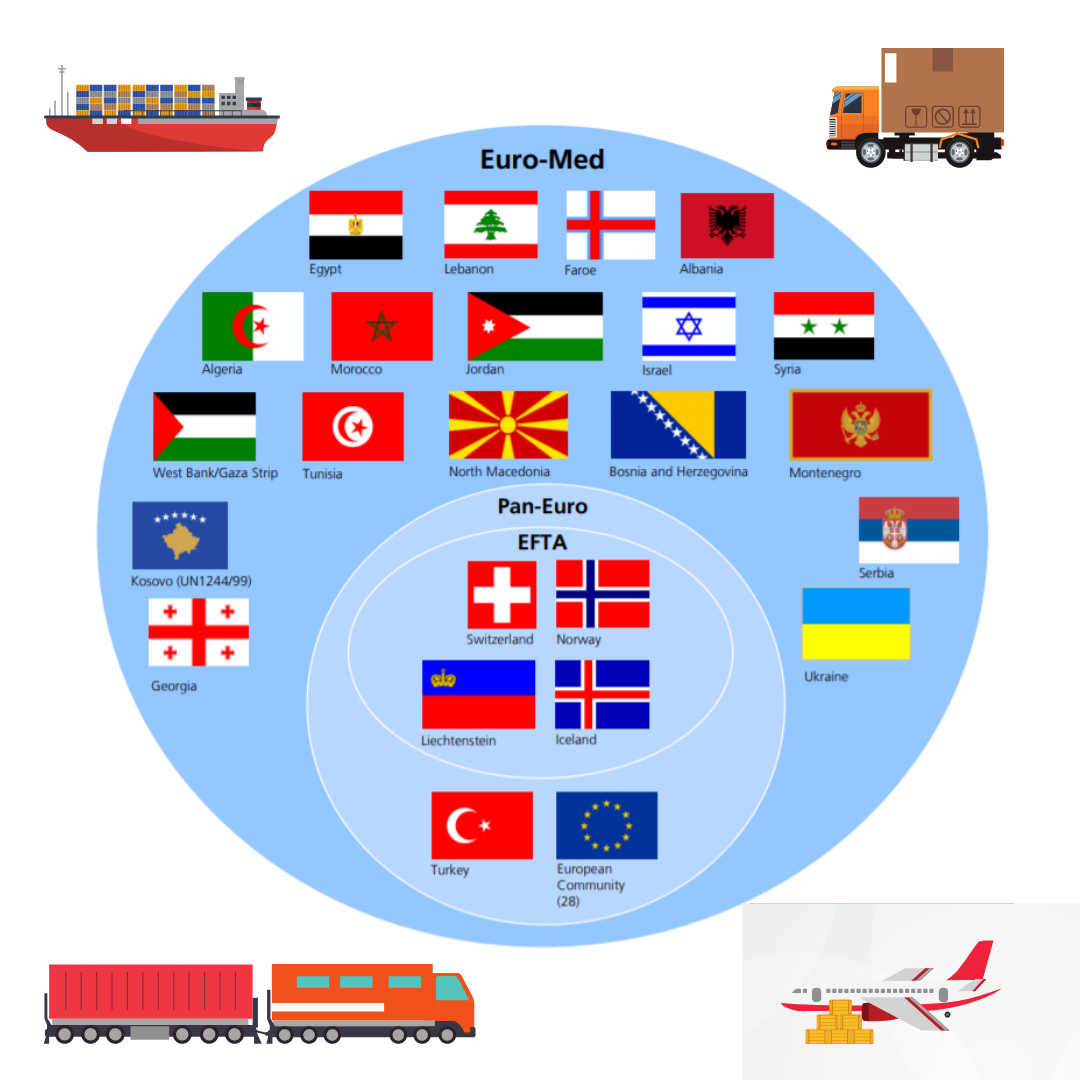
Renewal of the agreements this summer 2021 between the European Union and the 20 PEM countries of the Pan-Euro-Mediterranean area. The update of the agreements concerns simplifications for the attribution and attestation of preferential origin to facilitate trade and post-pandemic recovery.

List of pan-Euro-Mediterranean countries:

  • Ukraine, Albania, Bosnia and Herzegovina, Montenegro, Serbia, Kosovo, North Macedonia, Georgia;
  • Norway, Iceland, Faroe Islands, Liechtenstein;
  • Turkey, Egypt, Israel, Jordan, Lebanon, Palestine,

Trade with the EMEP states in 2019 touched EUR 677 billion.

Follow this link to learn more

Glossary
  • Cumulation allows products originating in one country to be processed or incorporated into products originating in another country as if they originated in the latter.


export-in-corea-of-south.jpg

Savings and opportunities for Italian and European companies

There are many duty-free products for trade between Europe and South Korea (the eighth largest destination for EU goods). In particular, the following can be exported from Europe: automobiles, electronics, pharmaceutical industry products, chemical products. The recent free trade agreement also encourages the export of fishery andagricultural products.

The advantages are related to savings, a lighter management of customs procedures which have become simpler and faster. Recognition of product certificates and access to public procurement is improved. On the legal side, there is greater strength in the protection of trademarks and the recognition of intellectual property.

FIND OUT MORE ABOUT SOUTH KOREA

The 2020 statistics confirm Italy as Korea's number one leather goods supplier, with Korean imports worth $1 billion 300 million. (InfoMarketsForeign)

OUTLOOK COUNTRY

Download here the fact sheet of InfoMarketsExternal


Fullcargo

An Italian company and a global network with local expertise.With us your goods can travel with the necessary care and attention.

FDX Partners

Fullcargo is part of the FDX network, an international association of qualified and experienced freight forwarders.