
(+39) 02 9595721
india-ports-full-cargo.jpg

India–Europe Logistics Corridor: Key Indian Ports and Services for EU Freight Partners

India is emerging as a strategic logistics hub for European shippers looking for reliable long-term partners along the EU–India trade lane. Its network of deep-sea ports, logistics corridors and trade agreements is reshaping how full cargo flows move between Europe and the Indian subcontinent. 

Why India Matters for EU Logistics and Freight Forwarders

For EU-based logistics buyers, India offers a combination of scale, diversification and strategic location on main East–West shipping routes. West-coast ports directly connect to leading European hubs, while inland corridors link major production clusters with export gateways.

The EU and India have concluded a comprehensive free trade agreement that will progressively eliminate or reduce tariffs on a large share of goods traded between the two regions, creating strong incentives for higher physical cargo volumes. Detailed questions and answers on the agreement are available here: Questions and answers on the EU–India Free Trade Agreement.

According to official EU information on trade relations with India, the agreement is designed to ensure fair market access, predictable investment conditions and full respect of multilateral trade rules, with maritime transport playing a central enabling role. EU trade relations with India – European Union.


Key Indian Ports Serving EU-Bound Cargo

India’s port system includes a set of “major ports” wholly owned by the Government of India, complemented by numerous minor ports. Official figures indicate there are currently 12 major ports governed by the Major Port Authorities Act, 2021: Deendayal, Mumbai, Jawaharlal Nehru, Mormugao, New Mangalore, Cochin, V.O. Chidambaranar, Chennai, Kamarajar, Visakhapatnam, Paradip and Syama Prasad Mookerjee Port. Press Information Bureau – Major and Minor Ports.

For EU logistics buyers, several of these ports are particularly relevant as gateways for Europe-bound cargo, due to their capacity, connectivity and industrial hinterlands.

West Coast: Main Gateways to Europe

  • Jawaharlal Nehru Port (JNPA, Nhava Sheva) – Located in Maharashtra near Mumbai, JNPA is one of India’s primary container ports and serves as a crucial hub for containerised exports to global markets, including Europe. It is listed among the major ports serving India’s western seaboard.
  • Deendayal Port (Kandla) – Situated in Gujarat, Deendayal Port is a major facility for liquid and dry bulk cargo and supports a wide inland market connected to manufacturing and processing industries with strong export orientation.
  • Mumbai Port – Also on the west coast, Mumbai Port handles a varied cargo mix and historically functions as a core gateway for international trade, complementing container flows via JNPA.
  • Cochin Port – Located in Kerala on the southwest coast, Cochin is recognised as a major port and serves as an important node on Indian Ocean shipping routes, with the potential to support Europe-linked services via regional and long-haul connections.

These west-coast ports, recognised officially as major ports, are well placed to capture additional EU-bound volumes as trade preferences are implemented and capacity continues to develop along the India–Europe corridor.

East and South Coasts: Complementary Hubs

  • Chennai Port – A long-established major port on the southeastern coast, Chennai handles containers, automobiles and other general cargo, and is part of India’s official list of major ports.
  • Kamarajar Port (Ennore) – Also in Tamil Nadu, Kamarajar is listed as a major port and plays an important role in handling bulk and project cargo linked to industrial growth in the region.
  • Visakhapatnam Port – On the east coast in Andhra Pradesh, Visakhapatnam is a deep-water major port handling coal, iron ore, crude and other commodities relevant for global supply chains.
  • Paradip Port – Located in Odisha on the eastern seaboard, Paradip is another major port focused on bulk cargo, supporting industrial corridors that connect to international markets.

By combining west-coast gateways with east and south-coast major ports, EU logistics planners can design India–Europe solutions that balance transit times, cost and proximity to India’s key production zones.


Logistics Services Under the EU–India Trade Framework

Logistics services are explicitly addressed in analytical work prepared in the context of the EU–India Trade and Investment Agreement, highlighting their importance for both economies. A comprehensive study examines the prospects of liberalising trade in logistics services between India and EU Member States, and identifies market access and regulatory barriers. Logistics Services under Indo–EU TIA – Centre for WTO Studies.

The study describes logistics as encompassing the planning, organisation, management, execution and control of freight transport operations, with strong emphasis on door-to-door integration and coordination between different transport modes. It also underlines the relevance of auxiliary services such as warehousing and freight forwarding.

For EU logistics buyers, this means that the evolving EU–India framework is not only about tariff reductions but also about clearer conditions for cross-border logistics cooperation, transparency and standards, creating a more predictable environment for long-term partnerships.


Official Information on EU–India Trade and Connectivity

The European Union provides dedicated, regularly updated pages on its trade relationship with India, including key data, policy priorities and the state of bilateral agreements. This is a primary reference for understanding the institutional context in which logistics operators work. EU–India Agreements – EU Trade.

Additional information from the European Parliament outlines India’s connectivity initiatives and their relevance for EU trade, with references to transport, infrastructure and corridor development. This helps logistics decision-makers align their network strategies with long-term policy directions. India Connectivity Initiatives – European Parliament Briefing.

On the Indian side, the Press Information Bureau provides official releases on ports policy, including the status and governance of major ports, while other government-linked resources describe the distribution and economic impact of India’s ports across both coasts. Major and Minor Ports – Press Information Bureau. Overview of Major Ports in India.


What EU Logistics Buyers Should Look for in Indian Partners

When European shippers and freight forwarders search for logistics partners in India, they operate within this institutional framework of recognised major ports, trade agreements and connectivity initiatives. To select the right counterpart, they typically consider:

  • Presence in major government-recognised ports – Operators active in Jawaharlal Nehru, Deendayal, Mumbai, Cochin, Chennai, Kamarajar, Visakhapatnam or Paradip can offer direct access to the main corridors defined in official port policy.
  • Understanding of EU–India trade rules – Partners familiar with the EU–India trade agreement architecture and customs and trade facilitation provisions are better positioned to handle compliant, fast cross-border flows. Q&A on the EU–India Free Trade Agreement.
  • Alignment with connectivity and corridor priorities – Companies that structure their services around recognised connectivity initiatives and logistics corridors can offer more predictable and scalable solutions. India Connectivity Initiatives – European Parliament.

Read more

EU–India Free Trade Agreement: what it means for companies shipping full cargo to India


EU–India-Free-Trade-Agreement-full-cargo-1200x675.jpg

what it really changes for companies shipping goods to India

The European Union–India Free Trade Agreement is often described as a political or diplomatic milestone. In reality, it is something far more concrete. It is a long-term structural agreement designed to make trade between Europe and India easier, more predictable, and less exposed to friction. Lower tariffs, simplified rules, clearer frameworks for goods, services, and investments.

Think of it as a change in operating conditions for companies—not as a press release. To understand the institutional framework behind the agreement, the European Commission provides detailed documentation on EU–India trade relations and ongoing negotiations.


India is everywhere in the conversation. Is it really becoming a key market?

India is not becoming relevant. It already is. What is changing is scale, depth, and intent. India is consolidating its role as a manufacturing hub, a fast-growing consumption market, and a strategic logistics partner for Europe. The Free Trade Agreement accelerates a trend that has been underway for years: more goods, more routes, and increasingly complex cargo flows between Europe and India.

According to data and analyses from global institutions such as the World Bank, India plays an increasingly central role in global trade and logistics networks. This is not a temporary shift. It is a reconfiguration.


Why should companies care about this agreement now?

Because trade agreements do not stay on paper. They translate into changes in:

  • cost structures,
  • pricing logic,
  • delivery times,
  • and margins.
If your company exports or imports goods, works with international suppliers, plans to grow in Asia, or depends on stable supply chains, this agreement will directly affect your competitiveness in the coming years. Ignoring it means reacting late. Understanding it means planning early.

Is this agreement relevant only for large multinationals, or also for SMEs?

It affects both—just in different ways. Large corporations may rethink sourcing strategies, supply chain architecture, and long-term investments.
For SMEs, the impact is often more pragmatic: lower entry barriers, clearer customs rules, and reduced costs that previously made India feel “too complex” or “too far away.”

For many European SMEs, this agreement is not about aggressive expansion. It is about finally making India viable.


Which industries are most impacted?

The strongest effects are expected in sectors such as:

  • automotive and components,
  • machinery and industrial equipment,
  • pharmaceuticals and healthcare,
  • textiles, fashion, and leather goods,
  • agri-food and specialty products,
  • digital and professional services.

That said, even companies outside these sectors may feel indirect effects through pricing pressure, sourcing shifts, or strategic decisions made by partners and competitors. Trade rarely stays confined to one industry.


What should companies do right now?

This is not a legal exercise. It is a business clarity exercise. Three actions make sense:

Understand exposure
Map where India—or the EU—already touches your business: suppliers, clients, competitors.

Align internal teams
Procurement, sales, operations, and leadership should share the same understanding of what is changing.

Update market positioning
Trade conditions influence pricing, delivery times, and value propositions. Communication matters. Doing nothing is still a decision.


Why is the EU–India FTA strategically important beyond trade?

Because it reflects a broader global shift. The agreement is part of a move toward:

  • diversified supply chains,
  • reduced dependency on single markets,
  • long-term economic partnerships instead of short-term fixes.

Organizations such as the OECD highlight how resilience and diversification are becoming central to global supply chain strategies. For companies, this means more opportunity—but also more responsibility in how growth is planned.


Shipping full cargo to India: a new destination or a complex one?

India is not new. It is complex, layered, and unforgiving of improvisation. Ports, customs procedures, documentation requirements, transit times, and local coordination require:

  • operational continuity,
  • on-the-ground knowledge,
  • and long-term logistics experience.

Indian customs and regulatory frameworks are managed by authorities such as the Central Board of Indirect Taxes and Customs, reflecting a system that demands precision rather than experimentation. This is why India is not a destination to “test lightly,” especially with full cargo shipments.


Who can realistically manage full cargo shipments to India?

Only operators who have done it consistently over time. Shipping full cargo to India means managing:

  • FCL containers and break bulk cargo,
  • industrial and oversized loads,
  • long-haul maritime planning,
  • documentation aligned with Indian customs procedures,
  • coordination between European exporters and Indian importers.

This is not simply about moving goods. It is about orchestrating systems across borders.


Why does experience matter more than price on this route?

Because mistakes are expensive. A missing document, an incorrect HS code, a misaligned Incoterm, or poor port coordination can lead to:

  • delays measured in weeks,
  • blocked or held goods,
  • demurrage and detention costs,
  • and strained commercial relationships.

On routes such as Europe–India, experience is not a premium. It is risk mitigation.


Where Fullcargo fits into this landscape

At Fullcargo, shipping full cargo to India is not a recent strategic experiment. It is part of our operational history. Long before India became a headline, it was already a destination we handled with continuity and structure —because complex markets reward experience, not improvisation. In a context reshaped by the EU–India Free Trade Agreement, that experience becomes even more relevant.


Read more

India–Europe Logistics Corridor: Key Indian Ports and Services for EU Freight Partners


dry_contaniner_fulcargo_italy-1200x800.png

From Milan to the World

Since 1988, Fullcargo has been connecting Italian exporters with global markets — shipping from Milan to India, South Korea, the UAE, and beyond.
Over nearly four decades, we’ve learned that choosing the right container is one of the most strategic decisions in international logistics.
This guide explains every main container type, why it exists, and when to use it — whether you’re exporting machinery, pharmaceuticals, or luxury goods.

Dry Container Fullcargo

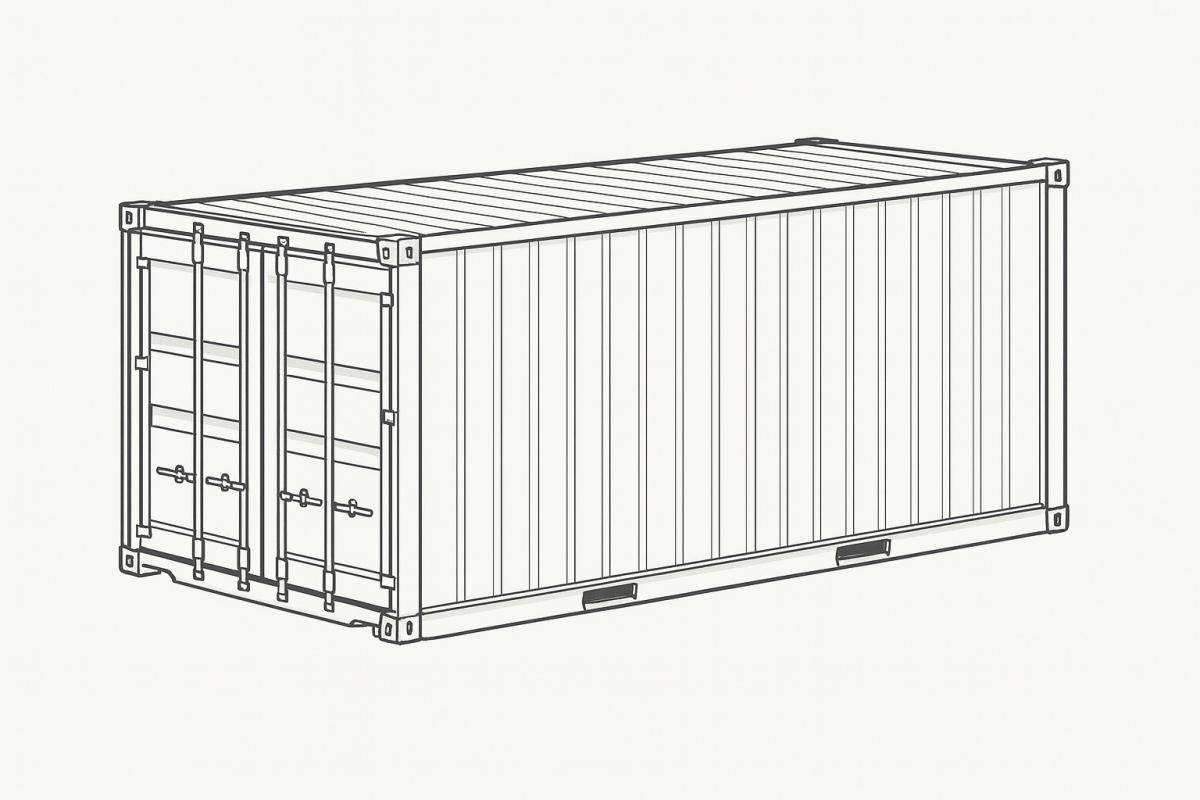
1. Dry Container (General Purpose Container)

What it is: The most common container type — fully enclosed, weatherproof, with solid walls and roof.
Why it’s used: Ideal for dry goods that don’t require temperature control.

Examples: Electronics, textiles, packaged goods, furniture.
Sizes available: 20ft and 40ft standard.
Pro tip: Perfect when your cargo is stackable and not sensitive to humidity or temperature fluctuations.

Reefer

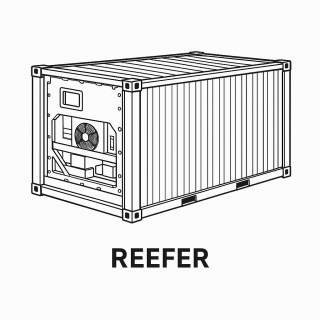
2. Reefer Container (Refrigerated Container)

What it is: A temperature-controlled container with an integrated refrigeration unit.
Why it’s used: To transport perishable items safely across long distances.
Examples: Food, dairy, pharmaceuticals, flowers.

How it works: Maintains temperatures between -30°C and +30°C, connected to vessel or terminal power.
Pro tip: Always check the temperature-monitoring system and ensure pre-cooling before loading.

Open Top Container Fullcargo

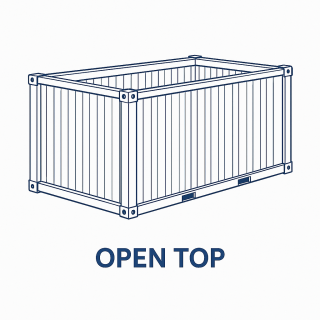
3. Open Top Container

What it is: A container without a fixed roof (covered with tarpaulin).
Why it’s used: For cargo taller than the container’s height that needs loading from above.

Examples: Heavy machinery, marble blocks, construction materials.
Pro tip: Use this container for oversized freight that can’t pass through standard doors.


flat rank container fullcargo italy

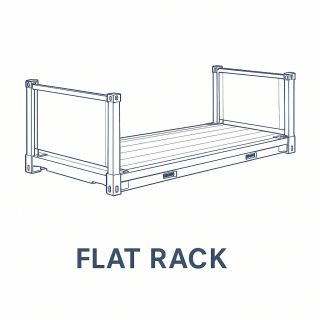
4. Flat Rack Container

What it is: A container with no side walls and sometimes no end walls.
Why it’s used: For heavy, wide, or irregularly shaped cargo.

Examples: Vehicles, pipes, industrial components.
Pro tip: Ideal for “project cargo” — items requiring crane loading or lashing to the deck.

Tank Container fullcargo italy

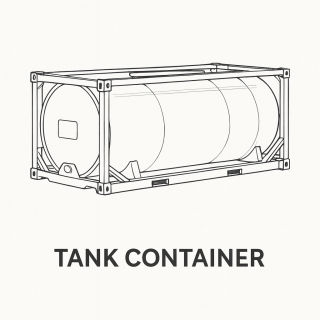
5. Tank Container

What it is: A cylindrical tank mounted inside a steel frame.
Why it’s used: To transport bulk liquids, chemicals, or gases safely.

Examples: Wine, fuel, oils, industrial chemicals.
Safety note: Each tank container follows ISO standards and requires periodic inspection.


Why Container Choice Matters in Global Logistics

Choosing the right container reduces risk, prevents delays, and optimizes shipping costs.
A container is not just a metal box — it’s a controlled environment for your product’s journey.

At Fullcargo, we help our clients:

  • Identify the most efficient and secure container type.
  • Optimize routes for India, South Korea, and the UAE.
  • Manage documentation and customs with precision.
  • Track and monitor cargo using digital freight tools.

Fullcargo: Italian Roots, Global Reach

Founded in Milan in 1988, Fullcargo has grown from a local forwarding company into a global logistics partner for industries ranging from fashion to machinery.
We ship worldwide — handling full-container loads (FCL), less-than-container loads (LCL), air freight, and project logistics.

Want to learn more?

Contact our logistics experts for a personalized consultation.


fullcargo-Firefly_ecologia-e-spedizioni-di-merci-nel-mondo-nel-prossimo-futuro-470557-1200x933.jpg
Le spedizioni internazionali sono la spina dorsale del commercio globale. Con l’arrivo del 2025, operatori logistici, aziende e brand che esportano in Corea del Sud, Giappone ed Emirati Arabi Uniti devono prepararsi ad affrontare cambiamenti normativi e ad adottare nuove strategie per restare competitivi. Scopri le novità più importanti e le tendenze che rivoluzioneranno il settore.

Nuovi Regolamenti sulle Spedizioni nel 2025

Aggiornamenti ADR 2025
Dal 1° gennaio 2025, le nuove disposizioni dell’Accordo Europeo per il Trasporto Internazionale di Merci Pericolose su Strada (ADR) includeranno:

    • Nuovi numeri ONU per batterie agli ioni di sodio e veicoli con batterie multiple.
    • Esenzioni estese ai rifiuti pericolosi.
    • Modifiche a documentazione, marcatura ed etichettatura.
      Il periodo transitorio termina il 1° luglio 2025!

Regolamento IATA per il Trasporto Aereo
Più di 350 modifiche influenzeranno il trasporto aereo di merci pericolose. Cambiamenti principali:

    • Esenzioni per data logger e tracker di carico.
    • Restrizioni aggiornate per merci trasportate da passeggeri.

Spedizioni di RAEE (Rifiuti da Apparecchiature Elettriche ed Elettroniche)

Nuove restrizioni per impedire esportazioni verso paesi privi di infrastrutture di trattamento adeguato. Queste normative mirano a una gestione più responsabile dei rifiuti elettronici.

Tendenze Logistiche per il 2025

  • Automazione e Intelligenza Artificiale
    Sistemi automatizzati e algoritmi di intelligenza artificiale ottimizzeranno le operazioni logistiche, riducendo errori e migliorando i tempi di consegna.
  • Logistica Verde
    La sostenibilità sarà un tema centrale, con investimenti in veicoli elettrici e soluzioni di imballaggio ecologiche per ridurre l’impatto ambientale.
  • Tracciabilità Avanzata
    Grazie all’Internet delle Cose (IoT) e alla blockchain, la supply chain diventerà più trasparente, migliorando il monitoraggio delle spedizioni e aumentando la fiducia dei clienti.

Prepararsi al Futuro delle Spedizioni

Operatori logistici e brand che esportano nei mercati asiatici e mediorientali devono:

  • Aggiornare le procedure operative secondo le normative 2025.
  • Investire nella formazione del personale per gestire nuove tecnologie e regolamenti.
  • Integrare soluzioni innovative per automatizzare e ottimizzare la supply chain.

Il 2025 sarà un anno cruciale per il settore delle spedizioni internazionali. Prepararsi alle nuove sfide normative e abbracciare le tendenze emergenti garantirà competitività, sostenibilità e successo nei mercati globali.


fullcargo-sustenability.png

Rendere sostenibile il business nel settore dei trasporti e della logistica presenta sfide uniche. Questo settore, essenziale per l’economia globale, dipende pesantemente da risorse che impattano sull’ambiente, come il carburante fossile. Le emissioni di gas serra, il consumo energetico elevato e la gestione dei rifiuti sono problemi critici. Inoltre, la crescente domanda di servizi di trasporto e logistica intensifica queste sfide, rendendo fondamentale per le aziende adottare strategie innovative ed efficienti per ridurre il loro impatto ambientale.

Nel competitivo settore dei trasporti, caratterizzato da notevoli sfide ambientali, FullCargo si sta impegnando in progetti di riforestazione. Cerchiamo di capire come…

Come FullCargo SRL si impegna nella sostenibilità?

Nonostante le difficoltà del settore, abbiamo compensato l’uso di 66.664 pagine standard di carta, piantando 8 alberi in Tanzania dal 12 gennaio 2023 con PrintReleaf. Un passo umile, ma significativo.

Quali sono le sfide della sostenibilità nel settore dei trasporti?

Il settore dei trasporti affronta la difficoltà di ridurre le emissioni e l’impatto ambientale a causa della sua natura intensiva di risorse e energia.

Cosa può fare una compagnia di trasporti per essere più sostenibile?

Oltre alle iniziative come quella di FullCargo, le aziende possono adottare veicoli a basse emissioni, ottimizzare le rotte e promuovere la cultura del riciclo e della riduzione degli sprechi.

Affrontare le sfide ambientali nel settore dei trasporti richiede coraggio e umiltà. Iniziative come quelle di FullCargo SRL sono essenziali per guidare il settore verso un futuro più sostenibile.


IMG-20230712-WA0010-1200x900.jpg

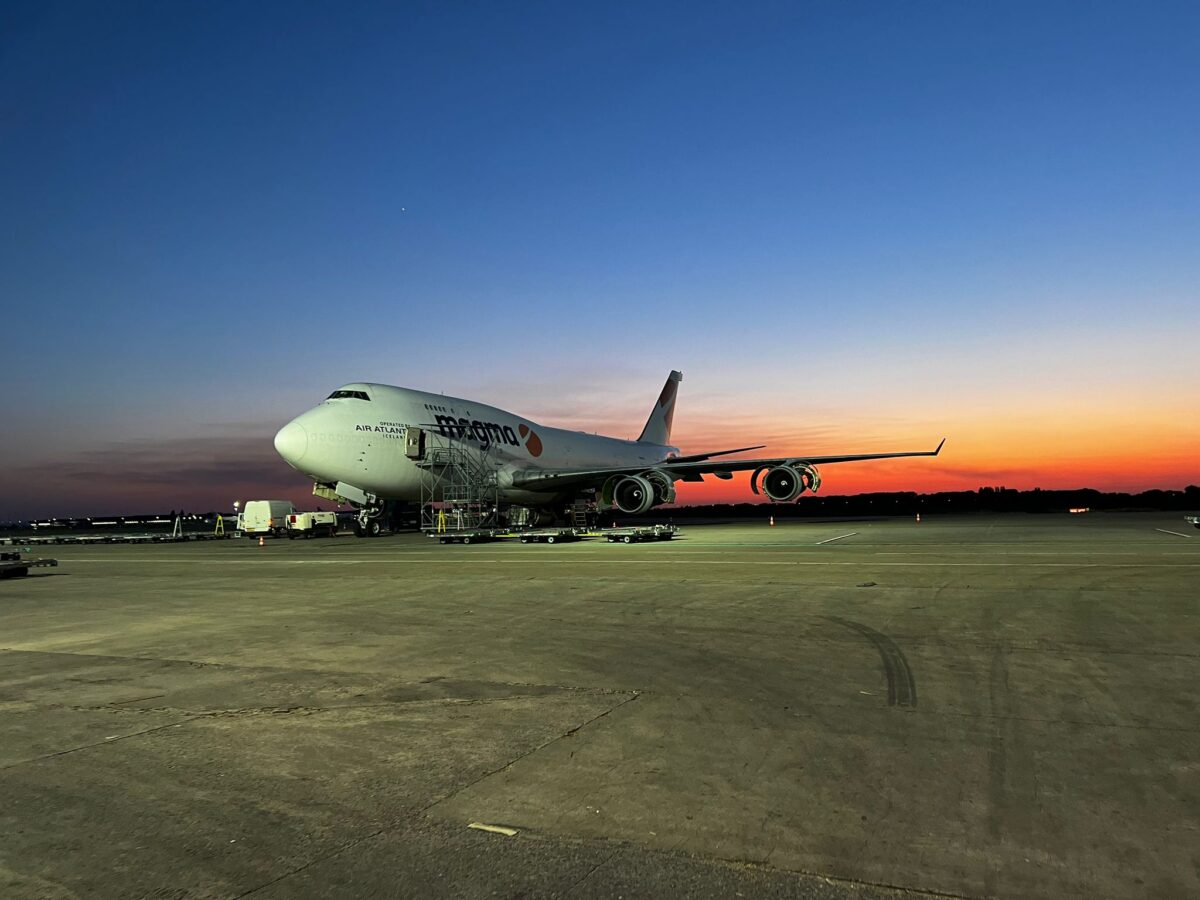
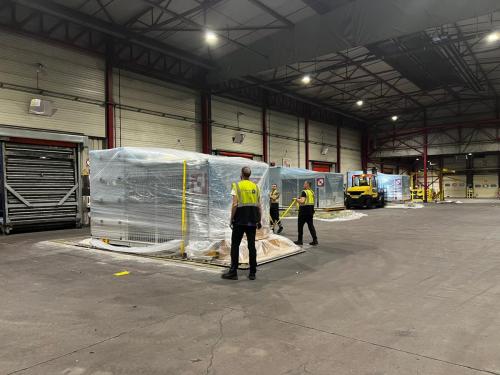
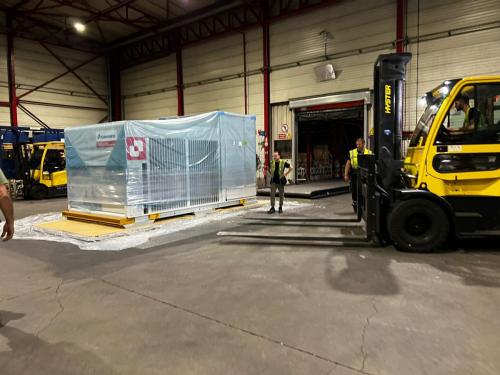
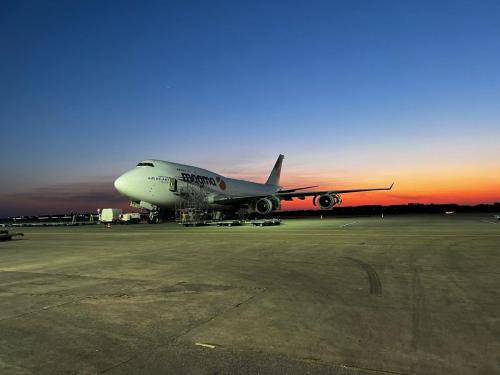
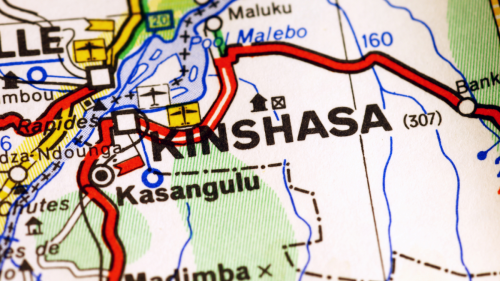
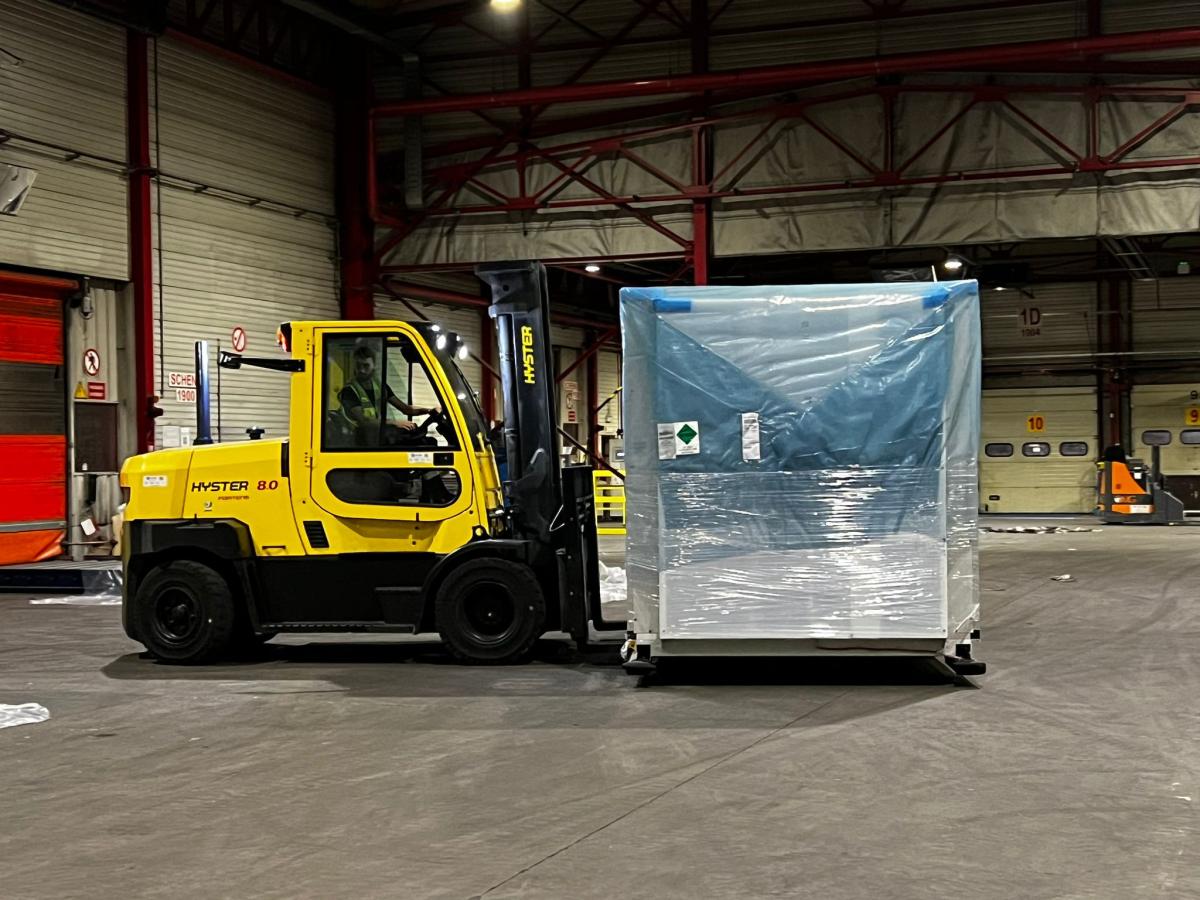
As the logistics industry evolves, specialized logistics partners are becoming increasingly vital. If you need further proof of this, then the sterling track record of FULLCARGO is an excellent case in point. One of our most recent successes was the seamless execution of a large-scale operation, involving moving three charter flights from Liegi Airport (B747 F) to Kinshasa. This was no ordinary shipment; it involved a significant haul of 60 tons of parquet for basketball stadiums and also an additional 200 tons of diverse goods (podium, all cooling system for 2 stadiums). Let’s delve into the benefits of working with specialized logistics partners and how FULLCARGO exceeded expectations.

Expert Handling of Specialized Cargo

Moving cargo, especially when it involves high-value items, requires industry-specific knowledge and experience. We moved 60 tons of parquet for basketball stadiums, illustrating our capability to handle your special cargo requirements. Whether it’s a sensitive or oversized cargo, FULLCARGO provides expertise and precision handling.

Comprehensive Solutions

We don’t stop at moving cargo. For this project, we also transported basketball podiums and the complete cooling system for two stadiums. This level of integration provides you with a one-stop solution, eliminating the stress and complexity of coordinating with multiple logistics providers.

Seamless Loading and Unloading

FULLCARGO’s expertise extends to every phase of the logistics process. With our wealth of experience in loading and unloading, you can be sure of a seamless transition of your goods. The pictures below show the care we take in stowing goods inside the aircraft, and the proficiency with which we unload from the aircraft.

#bwg_container1_0 { display: table; /*visibility: hidden;*/ } #bwg_container1_0 * { -moz-user-select: none; -khtml-user-select: none; -webkit-user-select: none; -ms-user-select: none; user-select: none; } #bwg_container1_0 #bwg_container2_0 .bwg_slideshow_image_wrap_0 { background-color: #F2F2F2; width: 800px; height: 500px; } #bwg_container1_0 #bwg_container2_0 .bwg_slideshow_image_0 { max-width: 800px; max-height: 410px; } #bwg_container1_0 #bwg_container2_0 .bwg_slideshow_embed_0 { width: 800px; height: 410px; } #bwg_container1_0 #bwg_container2_0 #bwg_slideshow_play_pause_0 { background: transparent url("https://www.fullcargo.eu/wp-content/plugins/photo-gallery/images/blank.gif") repeat scroll 0 0; } #bwg_container1_0 #bwg_container2_0 #bwg_slideshow_play_pause-ico_0 { color: #D6D6D6; font-size: 35px; } #bwg_container1_0 #bwg_container2_0 #bwg_slideshow_play_pause-ico_0:hover { color: #BABABA; } #bwg_container1_0 #bwg_container2_0 #spider_slideshow_left_0, #bwg_container1_0 #bwg_container2_0 #spider_slideshow_right_0 { background: transparent url("https://www.fullcargo.eu/wp-content/plugins/photo-gallery/images/blank.gif") repeat scroll 0 0; } #bwg_container1_0 #bwg_container2_0 #spider_slideshow_left-ico_0, #bwg_container1_0 #bwg_container2_0 #spider_slideshow_right-ico_0 { background-color: #FFFFFF; border-radius: 20px; border: 0px none #FFFFFF; box-shadow: ; color: #D6D6D6; height: 37px; font-size: 12px; width: 37px; opacity: 1.00; } #bwg_container1_0 #bwg_container2_0 #spider_slideshow_left-ico_0:hover, #bwg_container1_0 #bwg_container2_0 #spider_slideshow_right-ico_0:hover { color: #BABABA; } #spider_slideshow_left-ico_0{ left: -9999px; } #spider_slideshow_right-ico_0{ left: -9999px; } #bwg_container1_0 #bwg_container2_0 .bwg_slideshow_image_container_0 { bottom: 90px; width: 800px; height: 500px; } #bwg_container1_0 #bwg_container2_0 .bwg_slideshow_filmstrip_container_0 { display: table; height: 90px; width: 800px; bottom: 0; } /* Filmstrip dimension */ #bwg_container1_0 #bwg_container2_0 .bwg_slideshow_filmstrip_0 { left: 20px; width: 760px; /*z-index: 10106;*/ } #bwg_container1_0 #bwg_container2_0 .bwg_slideshow_filmstrip_thumbnails_0 { left: 0px; width: 1304px; height: 90px; } #bwg_container1_0 #bwg_container2_0 .bwg_slideshow_filmstrip_thumbnail_0 { width: 161px; height: 90px; margin: 0px 2px 0 0 ; border: 0px none #000000; border-radius: 0; } #bwg_container1_0 #bwg_container2_0 .bwg_slideshow_thumb_active_0 { border: 0px solid #FFFFFF; } #bwg_container1_0 #bwg_container2_0 .bwg_slideshow_thumb_deactive_0 { opacity: 1.00; } #bwg_container1_0 #bwg_container2_0 .bwg_slideshow_filmstrip_left_0, #bwg_container1_0 #bwg_container2_0 .bwg_slideshow_filmstrip_left_disabled_0 { background-color: #F2F2F2; display: table-cell; width: 20px; left: 0; } #bwg_container1_0 #bwg_container2_0 .bwg_slideshow_filmstrip_right_0, #bwg_container1_0 #bwg_container2_0 .bwg_slideshow_filmstrip_right_disabled_0 { background-color: #F2F2F2; display: table-cell; right: 0; width: 20px; } #bwg_container1_0 #bwg_container2_0 .bwg_slideshow_filmstrip_left_0 i, #bwg_container1_0 #bwg_container2_0 .bwg_slideshow_filmstrip_right_0 i, #bwg_container1_0 #bwg_container2_0 .bwg_slideshow_filmstrip_left_disabled_0 i, #bwg_container1_0 #bwg_container2_0 .bwg_slideshow_filmstrip_right_disabled_0 i { color: #BABABA; font-size: 20px; } #bwg_container1_0 #bwg_container2_0 .bwg_slideshow_filmstrip_left_0 { display: none; } #bwg_container1_0 #bwg_container2_0 .bwg_slideshow_filmstrip_left_disabled_0, #bwg_container1_0 #bwg_container2_0 .bwg_slideshow_filmstrip_right_disabled_0 { display: none; opacity: 0.3; } #bwg_container1_0 #bwg_container2_0 .bwg_slideshow_filmstrip_left_disabled_0 { display: table-cell; } #bwg_container1_0 #bwg_container2_0 .bwg_slideshow_watermark_spun_0 { text-align: left; vertical-align: bottom; } #bwg_container1_0 #bwg_container2_0 .bwg_slideshow_title_spun_0 { text-align: right; vertical-align: top; } #bwg_container1_0 #bwg_container2_0 .bwg_slideshow_description_spun_0 { text-align: right; vertical-align: bottom; } #bwg_container1_0 #bwg_container2_0 .bwg_slideshow_watermark_image_0 { max-height: 90px; max-width: 90px; opacity: 0.30; } #bwg_container1_0 #bwg_container2_0 .bwg_slideshow_watermark_text_0, #bwg_container1_0 #bwg_container2_0 .bwg_slideshow_watermark_text_0:hover { text-decoration: none; margin: 4px; position: relative; z-index: 15; } #bwg_container1_0 #bwg_container2_0 .bwg_slideshow_title_text_0 { font-size: 16px; font-family: Ubuntu; color: #FFFFFF !important; opacity: 0.70; border-radius: 5px; background-color: #000000; padding: 0 0 0 0; margin: 5px; } #bwg_container1_0 #bwg_container2_0 .bwg_slideshow_description_text_0 { font-size: 14px; font-family: Ubuntu; color: #FFFFFF !important; opacity: 0.70; border-radius: 0; background-color: #000000; padding: 5px 10px 5px 10px; } #bwg_container1_0 #bwg_container2_0 .bwg_slideshow_description_text_0 * { text-decoration: none; color: #FFFFFF !important; } #bwg_container1_0 #bwg_container2_0 .bwg_slideshow_dots_0 { width: 12px; height: 12px; border-radius: 5px; background: #F2D22E; margin: 3px; } #bwg_container1_0 #bwg_container2_0 .bwg_slideshow_dots_container_0 { width: 800px; bottom: 0; } #bwg_container1_0 #bwg_container2_0 .bwg_slideshow_dots_thumbnails_0 { height: 18px; width: 144px; } #bwg_container1_0 #bwg_container2_0 .bwg_slideshow_dots_active_0 { background: #FFFFFF; border: 1px solid #000000; }
#bwg_container1_0 #bwg_container2_0 #spider_popup_overlay_0 { background-color: #EEEEEE; opacity: 0.60; }
if (document.readyState === 'complete') { if( typeof bwg_main_ready == 'function' ) { if ( jQuery("#bwg_container1_0").height() ) { bwg_main_ready(jQuery("#bwg_container1_0")); } } } else { document.addEventListener('DOMContentLoaded', function() { if( typeof bwg_main_ready == 'function' ) { if ( jQuery("#bwg_container1_0").height() ) { bwg_main_ready(jQuery("#bwg_container1_0")); } } }); }

Trustworthy and Reliable

Your cargo is our responsibility, and we take that responsibility very seriously. When you entrust your goods to us, you can rest assured they’ll reach their destination safely and on time. With our successful completion of three full flights from Liegi Aiport (B747 F) as a testament, FULLCARGO has a track record that speaks for itself.

Versatility and Adaptability

FULLCARGO has the capacity to adapt to complex and demanding projects. The move to Kinshasa was a massive movement, showcasing our ability to rise to any logistics challenge.

FULLCARGO rocks!

At FULLCARGO, we take pride in the services we provide. As the saying goes, the proof of the pudding is in the eating. Our successful completion of these projects is a testament to our competence, reliability, and dedication to client satisfaction.

Choosing a specialized logistics partner like FULLCARGO means peace of mind, knowing your cargo is in safe hands. So why wait? Start working with FULLCARGO today and experience the benefits of a specialized logistics partner. Remember, when it comes to cargo logistics, FULLCARGO rocks!


kinshasa-full-cargo-1200x675.png

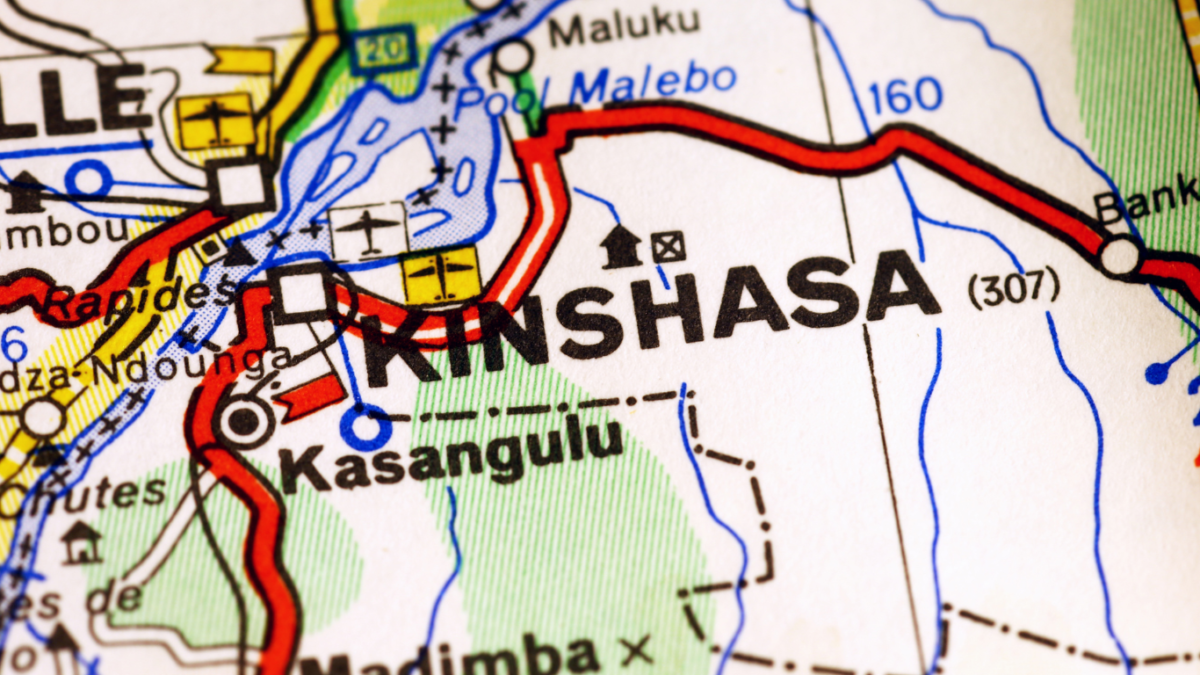
In una società sempre più globalizzata, il trasporto merci internazionale si rivela essere una componente cruciale per la crescita economica e lo sviluppo sostenibile. In particolare, l’interazione tra l’Italia e l’Africa – in questo caso specifico, Kinshasa, capitale della Repubblica Democratica del Congo – è di importanza fondamentale. Questa relazione offre un quadro chiaro delle sfide e delle opportunità che caratterizzano le spedizioni internazionali tra questi due punti del globo.

Recentemente, come Fullcargo, ci siamo occupati di due spedizioni significative dall’Italia a Kinshasa. La prima spedizione pesava 62 tonnellate e occupava 105 metri cubi, mentre la seconda spedizione consisteva in 20 tonnellate e occupava 100 metri cubi. Questi due trasporti, pur essendo diversi per peso, hanno occupato quasi lo stesso volume, mettendo in luce una delle principali sfide della logistica: l’ottimizzazione dello spazio.

Il trasporto merci dall’Italia a Kinshasa presenta diverse sfide. Innanzitutto, l’infrastruttura logistica in Africa può essere meno sviluppata rispetto a quella europea. Ciò può comportare ritardi e problemi di consegna. Inoltre, le questioni doganali e normative possono essere più complicate.

Il peso della merce non è l’unico fattore determinante nelle spedizioni. Il volume gioca un ruolo significativo nel determinare la capacità di un mezzo di trasporto, che può essere un aereo, una nave o un camion. Pertanto, è fondamentale considerare sia il peso che il volume durante la pianificazione delle spedizioni. La gestione efficiente di questi due fattori può portare a significative riduzioni dei costi logistici.

Nonostante queste sfide, esistono anche numerose opportunità. Kinshasa, essendo la capitale e il centro economico più grande del Congo, è una destinazione importante per l’esportazione di prodotti italiani. Inoltre, migliorare le capacità logistiche tra Italia e Kinshasa potrebbe favorire lo sviluppo economico in entrambi i Paesi.


LA DOGANA IN CONGO

Il processo di sdoganamento nella Repubblica Democratica del Congo può rappresentare un impegno complesso, per cui è fondamentale assicurarsi di avere tutta la documentazione regolarmente preparata e organizzata prima di procedere alla spedizione. È imprescindibile che ogni spedizione sia accompagnata da una lista di imballaggio dettagliata, comprendente il valore monetario di ciascun articolo incluso.

È altresì necessario provvedere ad una fattura commerciale e ad un certificato d’origine. La merce in arrivo potrebbe essere soggetta a dazi doganali e tasse di importazione, i quali vengono di solito calcolati sulla base del valore della merce stessa. Si devono anche considerare una serie di possibili costi aggiuntivi che potrebbero essere applicati, pertanto, si consiglia vivamente di richiedere un preventivo alla compagnia di spedizioni prima di procedere all’invio della merce.

In aggiunta ai documenti richiesti, esistono diverse limitazioni riguardo agli articoli che possono essere inviati nel Paese. Tra gli oggetti vietati si annoverano armi, munizioni, sostanze stupefacenti, materiale pornografico e certi tipi di alimenti e prodotti di origine vegetale.

In conclusione, l’ottimizzazione della logistica delle spedizioni tra Italia e Kinshasa richiede una gestione attenta del peso e del volume delle merci, un’adeguata comprensione delle infrastrutture logistiche e delle questioni normative, e una visione orientata alle opportunità di sviluppo economico bilaterale. L’esperienza delle due spedizioni citate è un esempio illuminante di come, con la giusta gestione, le sfide possano essere trasformate in opportunità.

Articoli correlati

CONVENZIONE PANEUROMEDITERRANEA (PEM)

Spedire negli Emirati Arabi Uniti e in Medio Oriente


pem-paneuromed.png

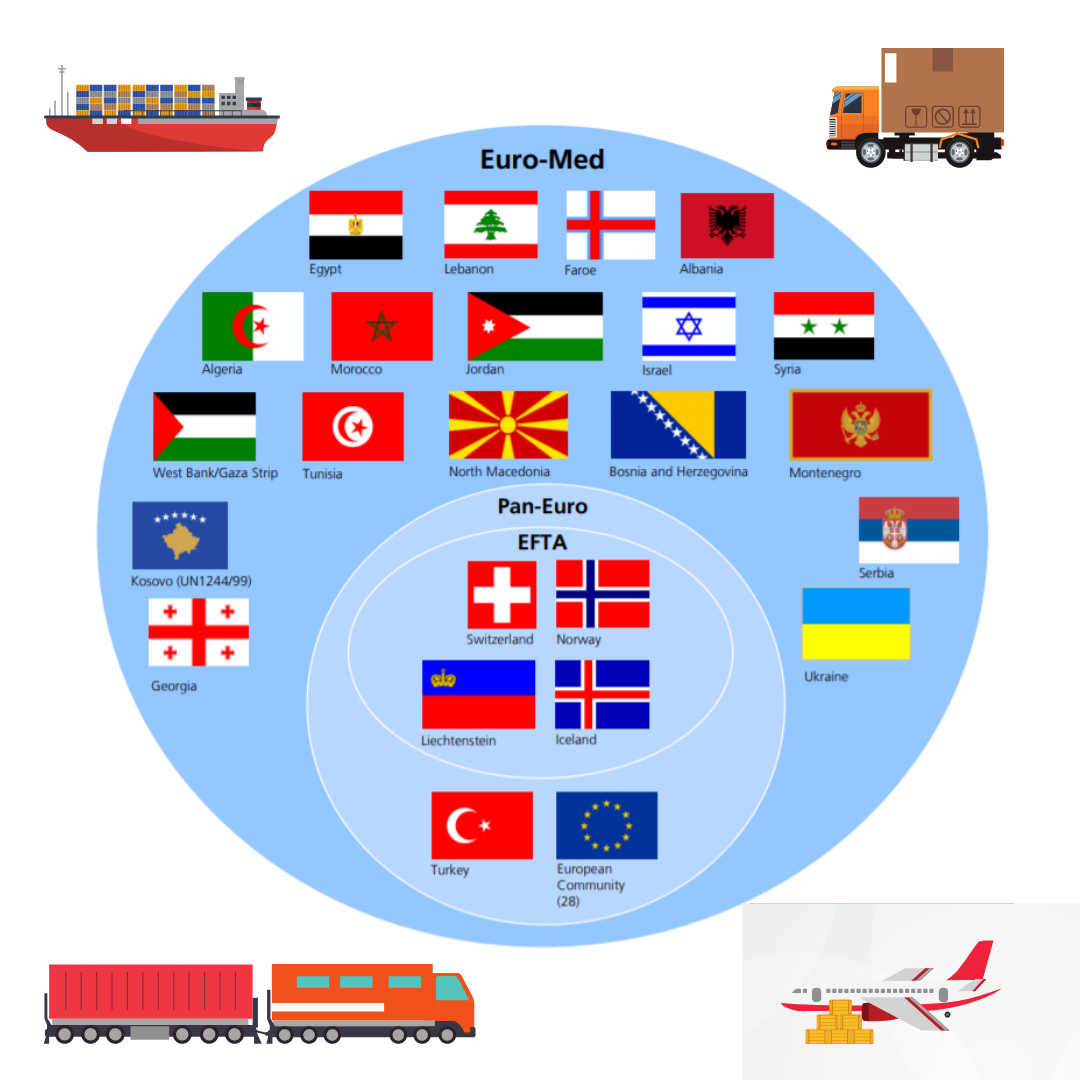
Rinnovo degli accordi questa estate 2021 tra L’Unione Europea e i 20 paesi PEM dell’area paneuromediterranea. L’aggiornamento degli accordi riguarda le semplificazioni per l’attribuzione e l’attestazione dell’origine preferenziale per favorire gli scambi e la ripresa post-pandemica.

Elenco dei paesi paneuromediterranei:

  • Ucraina, Albania, Bosnia-Erzegovina, Montenegro, Serbia, Kosovo, Macedonia del Nord, Georgia;
  • Norvegia, Islanda, Isole Fær Øer, Liechtenstein;
  • Turchia, Egitto, Israele, Giordania, Libano, Palestina,

Gli scambi commerciali con gli Stati PEM nel 2019 hanno toccato i 677 miliardi di euro.

Segui questo link per approfondire

Glossario
  • Il cumulo consente ai prodotti originari di un paese di essere trasformati o incorporati ai prodotti nati in un altro paese come se fossero originari di quest’ultimo


esportare-in-corea-del-sud.jpg

Risparmi e opportunità per le imprese italiane ed europee

Molti i prodotti senza dazi doganali per lo scambio commerciale tra l’Europa e la Corea del Sud (ottavo paese tra le destinazioni di merci dell’UE). In particolare, dall’Europa si possono esportare: automobili, elettronica, prodotti dell’industria farmaceutica, prodotti chimici. Il recente accordo di libero scambio favorisce anche l’esportazione di prodotti della pesca e dell’agricoltura.

I vantaggi sono legati al risparmio, ad una gestione più light delle procedure doganali che sono diventate più semplici e rapide. Migliora il riconoscimento dei certificati dei prodotti e l’accesso agli appalti pubblici. Sul versante legale si ha una maggiore forza nella protezione di marchi e nel riconoscimento della proprietà intellettuale.

SCOPRI DI PIU’ SULLA COREA DEL SUD

I dati statistici del 2020 confermano l’Italia al 1° posto tra i principali paesi fornitori di pelletteria della Corea, con un valore delle importazioni coreane pari a 1 miliardo 300 milioni di dollari. (InfoMercatiEsteri)

OUTLOOK PAESE

Scarica qui la scheda completa di InfoMercatiEsteri


Fullcargo

La nostra è una storia tutta italiana. Con noi le tue merci possono viaggiare con la cura e le necessarie attenzioni.

Partner FDX

Fullcargo fa parte del network FDX, un’associazione internazionale di spedizionieri qualificati ed esperti.